Quick Answer: If you’ve been in KiwiSaver for at least 3 years, you can withdraw nearly your entire balance for a first home — keeping only $1,000 in the scheme. That includes your contributions, your employer’s, and the government’s. In 2026, KiwiSaver is the single biggest deposit tool New Zealand first-home buyers have, especially since the $5,000–$10,000 First Home Grant was discontinued in May 2024.

Can I use KiwiSaver to buy my first home in NZ?
Yes — and for most New Zealanders under 40, KiwiSaver is the single largest pool of cash you can put towards a deposit. To withdraw your savings for a first home in 2026, you need to meet four conditions:
- You’ve been a KiwiSaver member for at least 3 years. That’s three years of active membership or contributions — not three years since you opened the account if it sat dormant.
- You’re a New Zealand citizen or permanent resident.
- You’re buying your first home in New Zealand — or you qualify under the “Second Chance Buyer” pathway (covered below).
- You intend to live in the home for at least 6 months after settlement. KiwiSaver can’t be used for a pure rental investment.
If you tick those four boxes, your KiwiSaver provider can release nearly your entire balance for the purchase. The only money that stays in the account is the $1,000 minimum that the scheme requires you to keep.
How much KiwiSaver can I withdraw for a first home?
Almost all of it. The rule is simple: you must leave $1,000 in your KiwiSaver, and you can withdraw everything else — including:
- Your own contributions (the 3%, 4%, 6%, 8%, or 10% you’ve been paying)
- Your employer’s matching contributions
- The government’s annual member tax credits
- All investment returns earned on those contributions
Worked example — solo buyer: Sarah, 31, has been in KiwiSaver since 2018. Her balance is $48,000. She can withdraw $47,000 for her first-home deposit.
Worked example — couple: Sarah and Jamie both withdraw. Sarah has $48,000 (keeps $1,000, withdraws $47,000). Jamie has $35,000 (keeps $1,000, withdraws $34,000). Combined deposit contribution: $81,000.
For a $650,000 new-build townhouse, $81,000 represents a 12.5% deposit — comfortably above the 5% threshold needed for a First Home Loan under the Kāinga Ora 5% deposit scheme, with enough left over to cover lawyer’s fees and moving costs.
If your KiwiSaver balance is less than what your bank wants as a deposit, you can stack KiwiSaver with the Kāinga Ora First Home Loan (5% deposit) scheme — which is exactly what we cover next.
KiwiSaver + First Home Loan — the 2026 first-home buyer stack
The most common path for Christchurch first-home buyers in 2026 is to combine two government-backed schemes:
- KiwiSaver First Home Withdrawal — pulls out your balance as deposit.
- First Home Loan — lets a bank lend the rest with only 5% deposit required.
The First Home Loan is underwritten by Kāinga Ora and offered through participating banks (Westpac, Kiwibank, SBS, and others). It works like a normal mortgage, but the bank takes on less risk because Kāinga Ora insures the difference between your small deposit and the 20% the bank would normally want.
Worked example — using both: A couple buying a $617,000 turnkey townhouse at Four Seasons Wigram.
- 5% deposit required: $30,850
- KiwiSaver withdrawal (combined): $35,000
- Result: deposit covered, with $4,000 left for legal and bank fees
- They borrow the remaining 95%, with the bank approving because the First Home Loan removes the LVR restriction that would normally block a new-build under 20%
The First Home Loan does carry a one-time Kāinga Ora Lender’s Mortgage Insurance fee of around 1% of the loan amount, but most banks allow that to be added to the loan rather than paid upfront.
For a full breakdown of how the 5% deposit option works — including eligibility rules and which banks process it fastest — see our 5% deposit new-build guide.
What happened to the First Home Grant?
If you’ve read older guides or talked to people who bought before 2024, you’ve probably heard about the First Home Grant — a $3,000–$10,000 cash payment from Kāinga Ora. It no longer exists.
The Coalition Government discontinued the First Home Grant on 22 May 2024, as part of Budget 2024, citing a need to reallocate roughly $245 million over four years toward social housing. Applications closed that day and no new grants have been paid since. Anyone telling you in 2026 that they can help you get the First Home Grant is working from outdated information.
What this means for you:
- No more $5,000 or $10,000 cash on top of your KiwiSaver withdrawal.
- KiwiSaver itself is unaffected — withdrawal rules haven’t changed.
- The First Home Loan (5% deposit scheme) is also unaffected — still available.
- The math now relies more heavily on KiwiSaver as the deposit source, which is why we’ve structured this guide around that.
How long does the KiwiSaver withdrawal take?
The official rule is 10 working days from a complete application. In practice, plan for two weeks — providers occasionally request additional documentation that can stretch the timeline.
The process runs in parallel with your home purchase:
- At pre-approval (before you’ve signed anything) — request a KiwiSaver withdrawal pre-approval letter from your provider. This isn’t a withdrawal; it’s a confirmation of your eligible balance. Most providers turn this around in a few days.
- After your offer is accepted — your solicitor handles the formal withdrawal application. You’ll need: the signed sale and purchase agreement, ID, proof of NZ residency, and your KiwiSaver provider details.
- 5–10 working days before settlement — your solicitor receives the released funds directly. The money never touches your personal account; it goes from KiwiSaver to your solicitor’s trust account, then to the vendor on settlement day.
Tip: Submit the formal application as soon as your offer is unconditional. Waiting until the week before settlement is the single most common reason KiwiSaver withdrawals delay settlements. Your bank pre-approval should be in place before you start house-hunting, not after.
KiwiSaver for a Christchurch new build — Tailored Homes examples
Most KiwiSaver-funded purchases in Christchurch in 2026 fall into one of three price brackets:
📍 Tailored Homes examples in each bracket
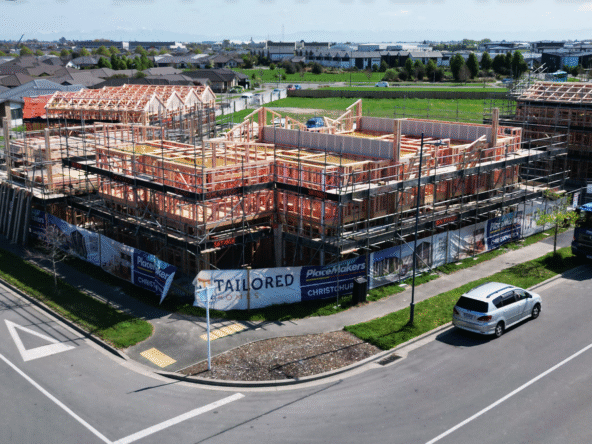
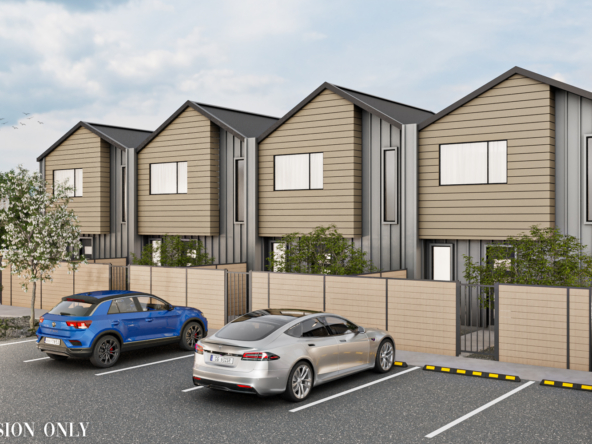
Entry tier: our 2-bedroom Hereford Street CHCH CBD townhouses. Mid tier: Lot A Kannedys landing — a 4-bedroom Halswell home. Premium tier: Quaifes Road Halswell, a 4-bedroom custom build with 186m² floor area.
Around $570,000 — a 2-bedroom freehold townhouse in Rolleston
The last unit at our 50 Broadway Parade development in Rolleston sits at $570,000 turnkey. A couple with combined KiwiSaver of $35,000 covers the 5% deposit ($28,500) comfortably and has cash left for fees.
Around $617,000 — a 3-bedroom townhouse at Four Seasons Wigram
Our Wigram townhouses start at $617,000. This is the typical sweet spot for FHB couples in their late 20s using a single mid-balance KiwiSaver plus a partner’s smaller balance.
Around $759,000+ — a standalone home in Lincoln
The Earlsbrook Lot 93 standalone in Lincoln is $759,000. At this price you’d want closer to $40,000–$50,000 combined KiwiSaver to keep the deposit comfortable. The home-and-income option at Lot 99 ($879,000) is also KiwiSaver-eligible if you’ll live in part of the property.
All three price points qualify for the First Home Loan 5% deposit scheme because new builds are exempt from standard LVR restrictions.
KiwiSaver Second Chance Buyer scheme — for previous home owners
You can still use your KiwiSaver for a home purchase even if you’ve owned property before, as long as you fit the “Second Chance Buyer” criteria. The path was originally designed for people who divorced, lost a home through circumstance, or simply can’t afford to re-enter the market under current conditions.
Eligibility (in 2026):
- You previously owned a home (or share of one) in New Zealand
- You no longer own any property
- Your current financial position is comparable to a first-home buyer — Kāinga Ora assesses this case by case, using assets, debts, and income
The application is processed by Kāinga Ora rather than your KiwiSaver provider directly. The provider releases funds once Kāinga Ora has issued a determination letter. Timeline: typically 4–6 weeks for the determination, then the standard 10 working days for the withdrawal.
Common mistakes to avoid
- Leaving the application too late. Submitting paperwork the week of settlement is how withdrawals delay settlement dates. Get pre-approval before house-hunting; submit the formal application the moment you go unconditional.
- Forgetting the $1,000 must stay in. Some buyers assume they can drain the account. The $1,000 minimum is non-negotiable — banks know this and won’t count more than (balance − $1,000) in your deposit calculation.
- Joint applications submitted as solos. If you and a partner both qualify, each of you submits separately to your own provider. Don’t try to consolidate into a single application — providers reject these and you’ll restart from the beginning.
- Wrong KiwiSaver fund type. If you’re 6–12 months from buying, switch from a Growth fund to a Conservative or Cash fund. A 10% market drop in your final year wipes out a year of contributions. Your provider can switch you in a phone call.
- Counting the now-defunct First Home Grant. As covered above, the Grant doesn’t exist in 2026. Don’t plan around a $5,000–$10,000 windfall that isn’t coming.
Frequently asked questions
Can I use KiwiSaver for a deposit on a new build?
Yes. New builds qualify for both KiwiSaver First Home Withdrawal and the First Home Loan (5% deposit scheme). New builds are also exempt from standard LVR restrictions, which means banks can lend with lower deposits than they would on an existing home.
What’s the minimum KiwiSaver balance I can withdraw?
There’s no minimum balance to start a withdrawal — but $1,000 must remain in your account. A $5,000 balance lets you withdraw $4,000; a $50,000 balance lets you withdraw $49,000.
Can my partner and I both withdraw?
Yes. Each of you submits a separate withdrawal application to your own KiwiSaver provider. Both releases go to the same solicitor and are pooled into the deposit.
Does the KiwiSaver withdrawal affect my mortgage approval?
No — banks treat your withdrawal as cash deposit, identical to genuine savings. Banks usually prefer KiwiSaver-funded deposits because they’re easier to verify than savings transferred from family.
Can I use KiwiSaver to build (not just buy)?
Yes, with a caveat. You can use KiwiSaver to buy a section, build on a section you already own, or buy a turnkey new build. For a self-build (where you contract the build separately), the withdrawal happens at completion rather than at section settlement — your solicitor manages timing.
Is the First Home Grant coming back?
There are no announced plans to reinstate the grant as of 2026. Government policy has shifted toward funding social housing and developer-built supply instead of buyer-side cash. We’ll update this guide if that changes.
Thinking about a new build in Christchurch?
If you’re in or near the deposit milestone and want to talk through what’s possible — whether that’s a Rolleston townhouse, a Wigram unit, or a standalone home in Lincoln — get in touch. We’ll point you to a mortgage broker who specialises in new-build finance and KiwiSaver-stacked deposits.
Related: How to Buy a Christchurch Townhouse — the complete first home buyer guide | The 5% deposit new-build scheme explained