In 2024, the New Zealand government restored full mortgage interest deductibility for new-build investment properties. For existing (second-hand) homes, this benefit has been phased out entirely. That single policy change has made new builds the most tax-efficient property investment in the country.
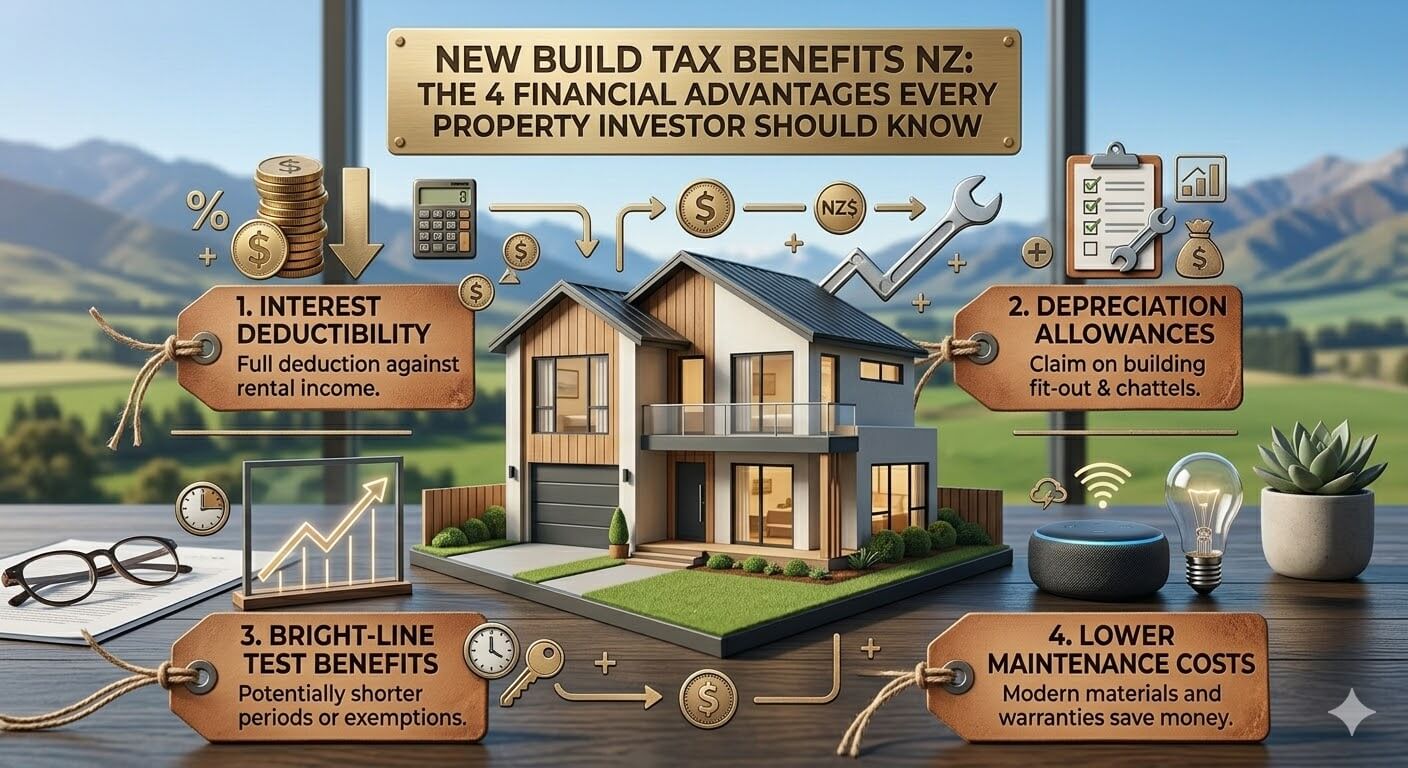
But “interest deductibility” is just the headline. There are at least four distinct financial advantages that new builds offer over existing properties — and most investors only know about one of them.
This article explains each benefit in plain English, with real numbers from a Christchurch new-build townhouse.
1. 20-Year Mortgage Interest Deductibility
What it means
When you buy a new-build investment property, you can deduct 100% of your mortgage interest payments from your rental income for tax purposes. This deduction lasts for 20 years from the date the Code Compliance Certificate (CCC) is issued.
For existing properties purchased after March 2021, interest deductibility has been fully removed. That is not a small difference — it fundamentally changes the math.
The numbers
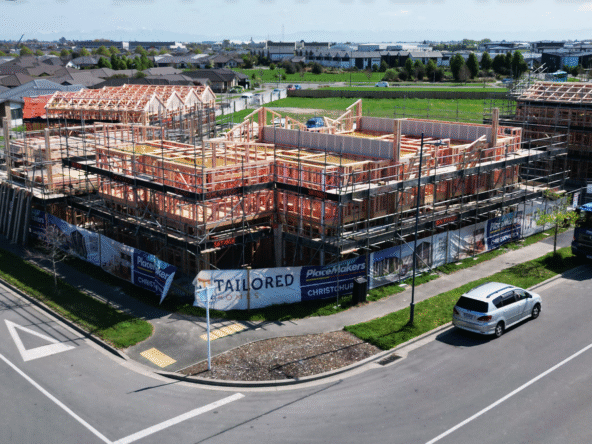
Take a typical 3-bedroom townhouse at Four Seasons Estate in Wigram, priced at $689,000:
| Item | New Build | Existing Property |
|---|---|---|
| Purchase price | $689,000 | $689,000 |
| Mortgage (80% LVR) | $551,200 | N/A — needs 65% LVR |
| Annual interest (@ 5.5%) | $30,316 | $24,614 |
| Interest deductible? | Yes — 100% | No — 0% |
| Annual tax saving (@ 33%) | $10,004 | $0 |
Over 20 years, that annual tax saving compounds into a significant reduction in your effective holding cost. It is the single biggest reason why new builds outperform existing properties on a net cash flow basis.
2. No LVR Deposit Restrictions
What it means
The Reserve Bank of New Zealand imposes Loan-to-Value Ratio (LVR) restrictions on investment property lending. For existing properties, investors need a minimum 35% deposit. For new builds, these restrictions do not apply — most banks will lend at 80% LVR (20% deposit).
The numbers
| Deposit requirement | New Build | Existing Property |
|---|---|---|
| Minimum deposit % | 20% | 35% |
| Cash needed (on $689k) | $137,800 | $241,150 |
| Difference | $103,350 less capital required | |
That $103,350 difference is not just “nice to have.” For many investors, it is the difference between being able to purchase and not. Lower capital requirements also mean a higher return on equity — your money works harder.
3. Chattels Depreciation
What it means
While you cannot depreciate the building itself, you can depreciate the chattels (fittings and fixtures) inside the property. With a new build, every single item is brand new, which means you start with the highest possible depreciation base.
Common depreciable items in a new-build townhouse
- Carpet and floor coverings — estimated useful life 8-12 years
- Curtains and blinds — 8-12 years
- Hot water cylinder — 10-15 years
- Dishwasher, oven, rangehood — 8-12 years
- Smoke alarms, light fittings — 5-10 years
- Garage door motor — 10-15 years
A quantity surveyor can prepare a depreciation schedule for your new build. Typical annual claims on a new townhouse range from $3,000 to $5,000 in the early years — a further tax reduction on top of your interest deduction.
With an existing property, many of these items are partially or fully depreciated already. You get less to claim.
4. Healthy Homes Compliance — Built In, Not Bolted On
What it means
Every rental property in New Zealand must meet Healthy Homes Standards — requirements for heating, insulation, ventilation, moisture, and draught stopping. Existing properties often need $5,000 to $15,000 in upgrades to reach compliance.
A new build meets or exceeds all Healthy Homes Standards on day one. The NZ Building Code requirements for new construction are stricter than Healthy Homes Standards in every category. There is no retrofit cost, no compliance risk, and no gap period where you are non-compliant.
Why it matters for your bottom line
Beyond avoiding the upfront compliance cost, a warm, dry, well-ventilated home attracts better tenants who stay longer. Lower turnover means fewer vacancy weeks and fewer letting fees. For investors, that translates directly into more consistent cash flow.
Real Example: Four Seasons Estate 3-Bedroom Townhouse
Here is how all four advantages combine in a single investment at Four Seasons Estate, Wigram:
| Line Item | Annual Figure |
|---|---|
| Purchase price | $689,000 |
| Deposit (20%) | $137,800 |
| Mortgage ($551,200 @ 5.5%) | $30,316 interest/yr |
| Rental income ($695/wk x 50 wks) | $34,750 |
| Property management (8%) | −$2,780 |
| Insurance + rates | −$3,200 |
| Maintenance (new build = minimal) | −$500 |
| Net rental income before tax | −$2,046 |
| Tax saving from interest deduction (33%) | +$10,004 |
| Chattels depreciation tax saving | +$1,200 |
| Net annual position (after tax) | +$9,158 cash positive |
Without interest deductibility, that same property would be roughly $850 cash negative per year. The tax benefit alone swings the position by over $10,000 annually.
Common Questions
“Does the 20-year deductibility reset if I sell and someone else buys it?”
No. The 20-year clock starts at the CCC date and stays with the property, not the owner. If you buy a 5-year-old “new build,” you get the remaining 15 years of deductibility. This is another reason to buy early — you get the full 20 years.
“Can I claim more by purchasing through a company or trust?”
The interest deductibility rules apply regardless of ownership structure. However, the tax rate differs: companies pay 28%, trusts pay up to 39%, and individuals pay their marginal rate (up to 39%). The right structure depends on your overall tax position — talk to your accountant.
“What happens when interest rates drop — do I lose the tax benefit?”
Lower rates mean smaller interest payments, so the deduction is smaller in absolute terms. But lower rates also mean lower holding costs. The net effect is still positive — your cash flow improves from both sides.
“Is this too good to last? Could the government change the rules?”
Policy can always change. But the current framework was specifically designed to incentivise new housing supply, which remains a national priority. The 20-year window also gives investors a long runway of certainty regardless of future policy shifts.
Disclaimer: This article provides general information only and is not tax advice. Tax rules depend on individual circumstances. Consult a qualified tax advisor or chartered accountant before making investment decisions.
Related: Wigram vs Prebbleton vs Halswell — which Christchurch suburb wins for investors?
Related: Why Wigram new townhouses are the “Cash Flow King” for 2026 property investment
Related: How to buy a new build with just 5% deposit
Ready to see these tax benefits in action? View the full Four Seasons Estate investment breakdown, or book a complimentary Cash Flow Stress Test with our team.
Related: How to Buy a Christchurch Townhouse — the complete first home buyer guide
Related: Christchurch Property Investment Guide 2026 — the complete overview