If you are building for the first time, the hard part is usually not understanding what a kitchen or cladding costs. It is understanding what happens when, who is responsible, and where delays usually come from. The custom home design and build process nz buyers go through is much easier to manage when you break it into a few clear phases and know which decisions belong in each one. In practice, most projects move from brief and concept work, to council approvals, to staged construction, to final hand-over and defect follow-up.
Overview
Most custom homes in New Zealand move through three phases: Plans, Build, and Hand-over.
A realistic end-to-end range for many Christchurch and Canterbury projects is about 14-18 months (as of 2026) from first meeting to keys. Straightforward turnkey homes can be quicker, while complex private-land builds, difficult ground, or slower council approval paths can push the programme out.
- Plans: brief, concept design, pricing, working drawings, engineering, and council approvals. This often takes 3-5 months (as of 2026).
- Build: site works, foundation, frame, lock-up, internal fit-out, and exterior completion. This often takes 8-12 months (as of 2026).
- Hand-over: final checks, practical completion items, documents, settlement or final payment, and defects follow-up.
The main reason design-and-build feels easier than a split architect-then-tender model is that one team owns the handoff between these phases. That means fewer gaps between concept, cost, consent, and construction.
Plans Phase
The plans phase is where budget, site constraints, and council requirements are solved on paper, which is why it usually takes 3-5 months (as of 2026) before site works start.
Initial consult, budget, and site due diligence
This stage is not just about choosing a floor plan. It is where we work through how you want to live, what the section allows, where the sun comes from, what setbacks or covenants apply, whether you need geotechnical input, and what level of finish your budget realistically supports. It is also the point where finance needs to become specific, not vague. For illustration, a 5% deposit on a $650,000 project (as of 2026) is $32,500 (as of 2026), 10% is $65,000 (as of 2026), and 20% is $130,000 (as of 2026). If you are still mapping that side of the project, our deposit guide is a useful starting point.
Concept design, draft pricing, and council consent
Once the brief is clear, the project usually moves into concept sketches, revisions, indicative pricing, working drawings, engineering, and consent documentation. Some sites need only a building consent. Others need both a resource consent (RC) and a building consent (BC), especially where planning rules, coverage, recession planes, access, or stormwater issues come into play.
This is also where first-time buyers often misunderstand timeframes. MBIE’s Q1 January to March 2026 building consent monitoring reported that 94.5% of building consent applications were processed within the statutory timeframe nationally, with a median processing time of 13.0 working days (as of 2026). But that does not mean your whole plans phase is done in two or three weeks. Christchurch City Council says the statutory clock for a complete building consent application is 20 working days, and that clock stops when a request for information is issued. Its resource consent process shows the same pattern: a straightforward non-notified application may be 20 working days, but longer paths apply if hearings or notification are involved. In plain English, a 20-day legal clock is not the same as a 20-day real-world plans phase.
The clients who move through this stage best are usually the ones who make early selections, answer consultant questions quickly, and resist redesigning the brief halfway through consent drawings.
Build Phase
The build phase turns drawings into a real house in defined stages, and for most custom homes that means an 8-12 month programme (as of 2026) once the site is ready.
Foundation, frame, and weathertight shell
The early build programme usually covers site set-out, earthworks, drainage prep, foundation or slab, framing, roof structure, windows, doors, cladding, and other external envelope work. The goal is to get the home structurally complete and weathertight as soon as practical, because that reduces weather risk and allows interior trades to work efficiently.
Every stage still has to satisfy the New Zealand Building Code, which is performance-based rather than style-based. In other words, the issue is not whether a home looks modern or traditional. The issue is whether structure, moisture control, fire safety, durability, services, and energy efficiency perform as required.
Fit-out, finishes, and external completion
Once the shell is closed in, the project moves through plumbing and electrical rough-in, insulation, internal linings, waterproofing, plastering, joinery, kitchens, bathrooms, painting, flooring, heating, appliance install, driveways, patios, fencing, and landscaping. This is the part buyers usually picture, but it depends on everything before it being coordinated properly.
Inspections are part of that coordination. Since 22 August 2025, MBIE’s inspection timeframe rules require Building Consent Authorities to complete at least 80% of building inspections within three working days of request (as of 2026). That is helpful for programme certainty, but it does not remove all delay risk. Wet weeks, long-lead products, or subcontractor bottlenecks can still move the sequence.
Hand-over
Hand-over is not a single day; it is a short close-out phase covering checks, final documents, settlement or final payment, and the start of the defects period.
Pre-Completion Check and final walkthrough
The Pre-Completion Check (PCC) is where you walk the home as a finished product rather than as an active site. That lines up with Master Builders’ homeowner guide, which treats practical completion as the point where minor defects or incomplete work may remain, but the home is otherwise ready to live in. Good hand-over is detailed, not rushed. You want those items written down, assigned, and tracked to completion.
Settlement, possession, and defect follow-up
On a build on your own land, the end of the project is usually practical completion, final claim, code compliance certificate (CCC), and possession. On a turnkey or house-and-land purchase, it may line up with settlement. Either way, you should expect operating manuals, warranties, appliance details, guarantee documents, and a clear process for post-handover issues. Under the Building Act 2004, defects notified within 12 months of completion must be remedied within a reasonable time.
That is also why moving in early is rarely the smart plan. Final sign-off exists for a reason, and most owners should organise the move only once approvals, documents, and access arrangements are complete.
Realistic Timeline Factors
The biggest schedule differences usually come from decisions, consents, supply, weather, and subcontractor availability rather than from the framing itself.
- Council and consultant RFIs: a consent can slow down quickly if engineering details, drainage information, or planning responses are incomplete.
- Ground and weather conditions: soft ground, unexpected services, or wet winter periods can affect excavation, concrete pours, and exterior sequencing.
- Selections and procurement: kitchens, tiles, tapware, lighting, and joinery all need enough lead time. Late selections create site downtime later.
- Subcontractor availability: even a well-run programme relies on the right trades turning up in the right order. One late trade can push three others back.
- Client changes after start: changes made during construction are usually slower and more expensive than the same decision made in design.
The practical lesson is simple: buyers should judge a timeline by the whole chain, not by the best-case construction stage alone.
Common Pitfalls
Most painful build surprises are not dramatic structural failures; they are scope, allowance, and paperwork problems that were not understood early enough.
Variations can change more than one thing
A variation is not just an extra line on an invoice. It often changes design, procurement, labour, and programme. Moving a window after frame stage can affect structure, cladding, flashings, plasterboard, window manufacture, and sometimes kitchen or bathroom layout. Registered Master Builders guidance is clear on this point: variations and product substitutions should be discussed early and agreed in writing.
Allowances, PC sums, and payment-claim terms
An allowance is a placeholder budget. A PC item or PC sum is usually an allowance for a product not fully selected at contract stage, such as tiles, appliances, or tapware. A provisional sum is typically an allowance for work that is not fully defined yet. These are not automatically bad, but they shift uncertainty into your budget. For example, if your tile allowance is $45 per square metre (as of 2026) and you choose a $79 tile (as of 2026) across 60 square metres, that is a $2,040 difference (as of 2026) before any margin is applied.
Registered Master Builders also warns buyers to watch for unrealistically low PC sums, because they can make a contract look cheaper upfront and more expensive later. That is one reason we favour fixed-price clarity. If you want the wider budget picture, our new build cost breakdown is a helpful companion piece.
Payment claims matter too. Read the payment clause as carefully as the floor plan. Know when claims are issued, what milestone each claim relates to, how many days you have to pay, and what happens if there is a disagreement. MBIE’s Construction Contracts Act guidance exists because payment process clarity is part of a healthy build, not an afterthought.
How Tailored Homes Manages the Journey
The best way to reduce build stress is to make the process visible, with fixed milestones, written decisions, and one team owning the journey from first sketch to keys.
One team, clear milestones, and fixed-price discipline
At Tailored Homes, we design and build under one roof, so the handoff between design, pricing, consent coordination, and construction is not left to chance. We have been building across Christchurch and Canterbury since 2010 and have delivered more than 100 homes across Halswell, Wigram, Rolleston, Lincoln, Prebbleton, and St Albans (as of 2026). We are a licensed Master Builder, our homes carry a 10-year Master Build Guarantee (as of 2026), and our current published custom-build approach is fixed price with no provisional sums. We also provide a 24-month maintenance warranty (as of 2026). If you want the broader overview, see our Christchurch custom builder guide.
In practice, that means clients are not left guessing what comes next. We keep the process moving through visible milestones such as brief sign-off, concept approval, pricing, contract, consent lodgement, site start, slab, frame, lock-up, PCC, and hand-over. The aim is not to drown you in updates. It is to make sure the right decision is made at the right stage.
Real Canterbury examples
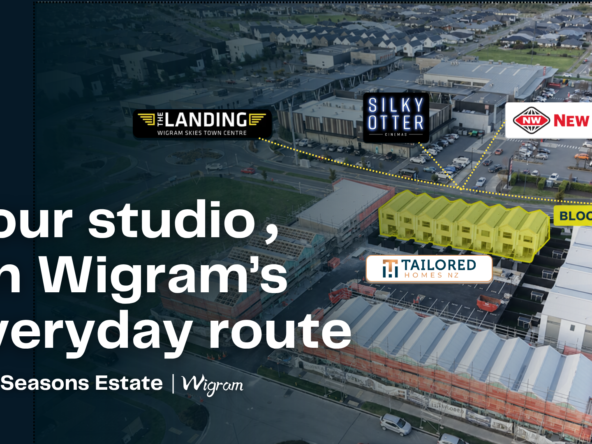
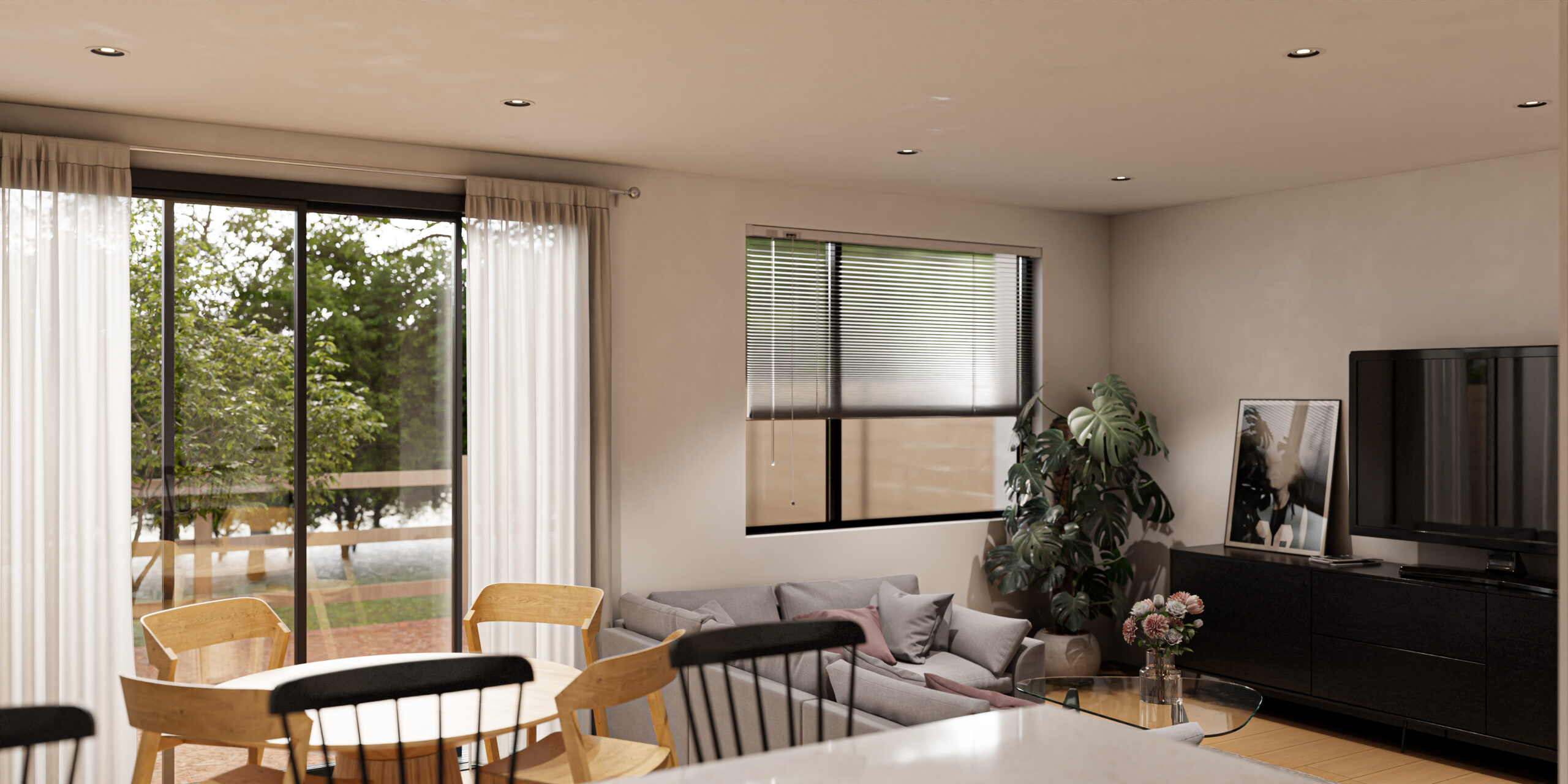
Our current work shows how different briefs create different design responses. In Wigram, Four Seasons Estate at 41 Deal Street is a 36-home freehold townhouse project (as of 2026) with 1 to 3-bedroom layouts (as of 2026), roughly 73.9sqm to 117.7sqm (as of 2026), designed around open-plan living and private outdoor areas, from $617,000 (as of 2026). In Prebbleton, our public examples include a 149.93sqm (as of 2026) three-bedroom home on a 301sqm (as of 2026) Trices Road section, a 176.18sqm (as of 2026) four-bedroom Hamptons Road home with a study on a 353sqm (as of 2026) section, and a 191.65sqm (as of 2026) design with cathedral ceilings (as of 2026). If you want a location-specific example of how section choice changes the process, our Prebbleton design-build guide goes deeper.
FAQ
These are the questions first-time buyers ask most often once the process becomes real rather than theoretical.
What if council delays my consent?
First, work out whether the delay is true queue time or a request for information. Statutory clocks can pause when more detail is required, so the fastest solution is usually a complete response from the design team, not repeated follow-up emails asking for status.
Can I move in before final sign-off?
Plan on no. In practice, most owners should wait for the code compliance certificate, final walkthrough outcomes, insurance confirmation, and lender approval if finance is involved.
What is a PC sum?
It is a placeholder allowance for an item or part of the work that is not fully specified when you sign the contract. If the real cost comes in higher than the allowance, you normally pay the difference and sometimes an additional margin.
How long is the defects period?
Your contract sets the working defects process, but New Zealand law also matters. Under the Building Act, defects notified within 12 months of completion must be remedied within a reasonable time, and Tailored Homes homes are also backed by a 24-month maintenance warranty (as of 2026) and a 10-year Master Build Guarantee (as of 2026).
How does financing usually work during build?
Most New Zealand construction loans are drawn in stages, so you usually pay interest only on the money already advanced rather than the full approved limit. Borrowing costs still move with the market: the Reserve Bank of New Zealand (RBNZ) listed the Official Cash Rate at 2.25% on 8 April 2026 (as of 2026), but your actual build-loan rate, deposit requirement, and servicing test come from your lender.
If you want a clearer, fixed-price path from first plans to final keys, start your design-build journey with Tailored Homes.