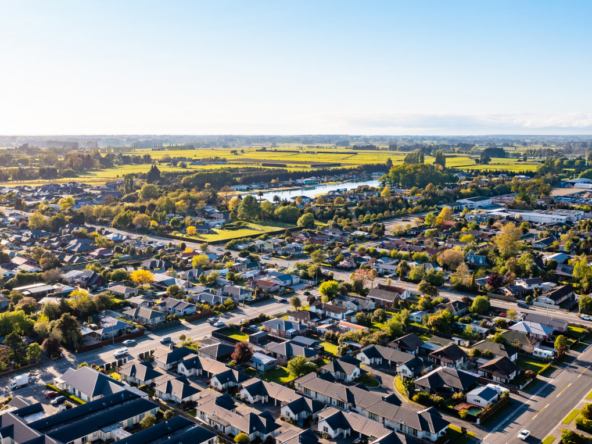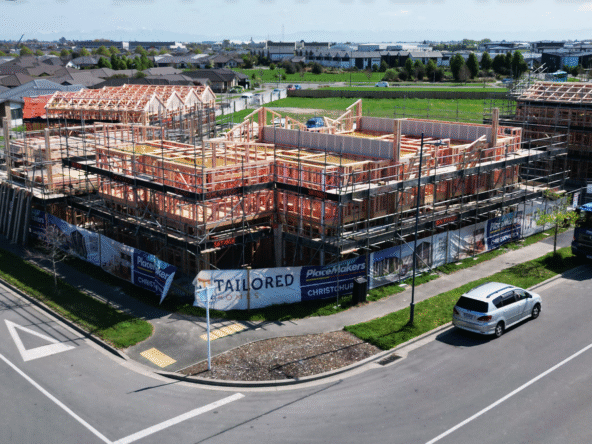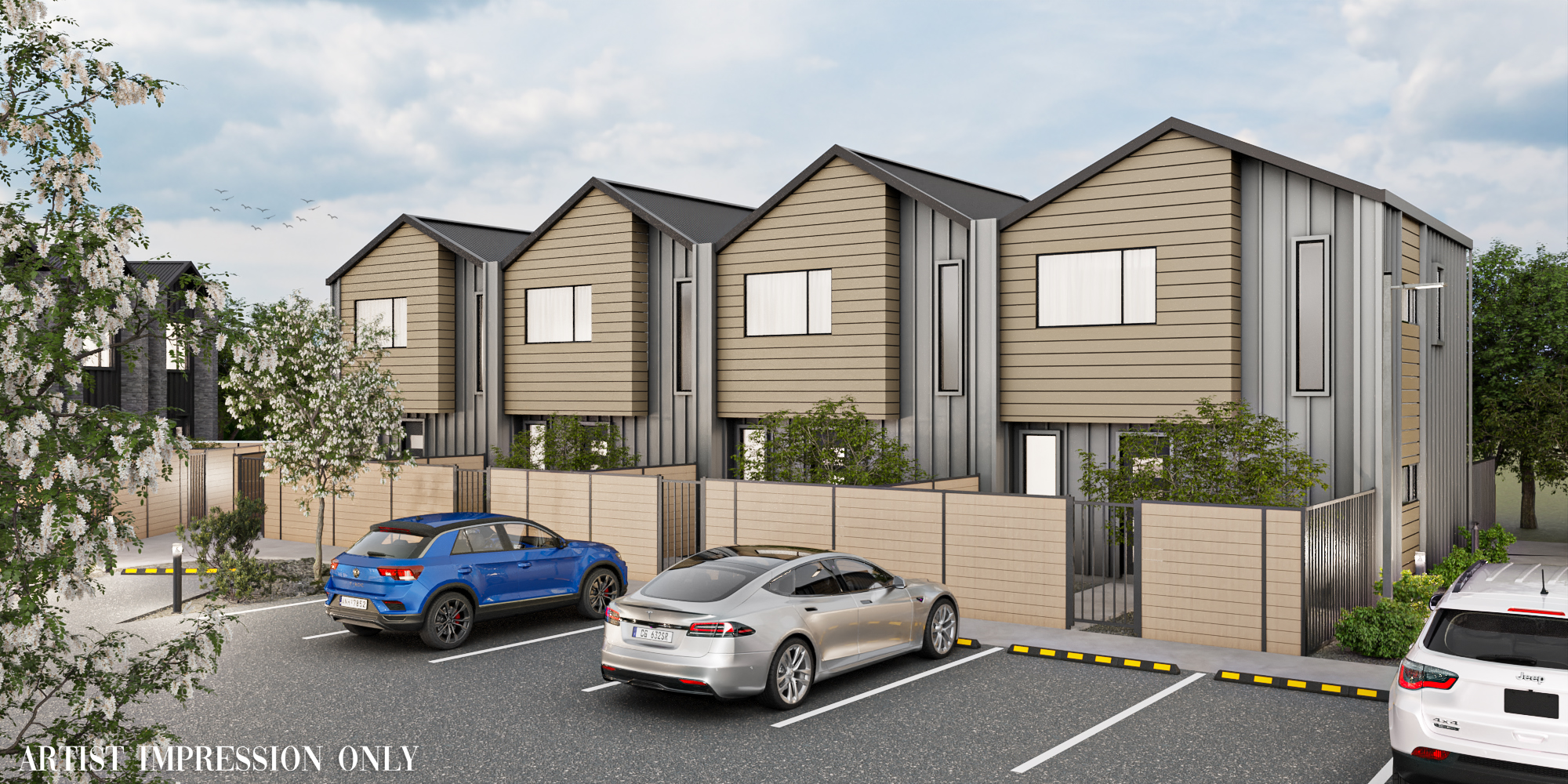
Choosing between a standalone vs townhouse Wigram purchase is really a choice about land, budget, upkeep, privacy, and how long you expect to live there. Wigram has a wide mix of new homes, from compact townhouses through to family-sized standalone homes on larger sections. As at June 2026, buyers are also weighing lending rules, insurance costs, Healthy Homes requirements for rentals, and resale demand across Christchurch’s south-west.
This guide compares the main new homes in Wigram options in plain English, so you can match the house type to your budget, lifestyle, and future plans.
Wigram’s typical housing mix for standalone vs townhouse Wigram buyers
Wigram has grown from a former airfield into one of Christchurch’s most established new-build suburbs. Wigram Skies, The Runway, and nearby Halswell and Aidanfield have shaped the area into a place with a broad spread of house types rather than one single style.
What you normally see on the ground
The local mix includes standalone family homes, duplex homes, two-storey townhouses, and smaller attached homes designed for low-maintenance living. A Wigram standalone home usually suits buyers who want a garage, garden, more storage, and stronger separation from neighbours. A Wigram townhouse often suits buyers who want a newer home at a lower entry point, with less weekend maintenance.
Wigram is also practical. The Landing retail precinct, local reserves, bus routes, Southern Motorway access, and Christchurch Airport links all help demand. For property market context, REINZ publishes New Zealand sales and median price information at reinz.co.nz, while lending conditions and LVR settings are set by the Reserve Bank at rbnz.govt.nz.
Standalone: cost, garden, freedom
A standalone home is the traditional choice for many Wigram buyers. You own the house and land, with no shared wall. That gives you more privacy, more outdoor space, and usually more flexibility over future changes.
What you pay for
Standalone homes generally cost more than townhouses because land is the scarce part. In Wigram, a larger section, wider frontage, double garage, off-street parking, and extra living space all push the price up. Buyers are not only paying for the building. They are paying for the section, orientation, outdoor area, and future flexibility.
The trade-off is that a standalone home may give you better long-term usefulness. Families often value a secure backyard, room for pets, space for visiting grandparents, and extra storage for bikes, tools, sports gear, or a trailer.
Garden and outdoor living
Standalone homes make more sense if you want a proper lawn, patio, vegetable boxes, or a play area. In Wigram, outdoor living is a real part of the appeal because many newer homes are planned around north-facing living, open-plan kitchens, and indoor-outdoor flow.
The cost is time. Lawns, fencing, planting, exterior washing, gutters, and paths need attention. If you travel often or work long hours, that garden may feel like a burden rather than a benefit.
Freedom to change the home
Standalone ownership usually gives you more options for future changes, subject to council rules, covenants, and any developer design controls. You may be able to add a pergola, improve landscaping, install solar, or change internal layouts more easily than in an attached home.
That freedom matters if you expect your household to change. A couple may become a family. A spare room may become a work-from-home office. A single garage may need storage systems. A standalone home gives you more room to adapt.
Townhouse: lock-up-and-leave, lower price
A townhouse is often the lower-maintenance choice. For first-home buyers, downsizers, single buyers, couples, and some investors, a townhouse can provide a newer home in Wigram without the full cost of a larger section.
Lower entry price
Townhouses are usually cheaper than standalones because they use land more efficiently. They often have smaller courtyards, shared driveways, compact footprints, and attached walls. That helps reduce the land cost per home.
For buyers comparing budget options, a Wigram townhouse from $617k can make the suburb more accessible than waiting for a larger standalone home. The right townhouse can still provide three bedrooms, internal-access garaging or allocated parking, modern insulation, double glazing, and efficient heating.
Maintenance and day-to-day living
The biggest lifestyle benefit is simplicity. A smaller outdoor area means less mowing, less planting, and fewer weekend jobs. That suits people who would rather spend time at work, with family, travelling, or using nearby parks instead of maintaining a large section.
Townhouses can also be easier to secure and leave empty for short periods. That lock-up-and-leave appeal is useful for shift workers, frequent travellers, and older buyers who want a newer home without a large garden.
What to check before buying
Not all townhouses are equal. Check storage, sunlight, acoustic separation, visitor parking, rubbish storage, body corporate or residents’ society arrangements, and how private the courtyard feels. A cheaper townhouse is not automatically better if the layout is tight or the living room gets poor sun.
If you are buying as a rental, remember that Healthy Homes Standards are compulsory for all rentals as at June 2026. Newer builds usually perform well, but landlords still need to check heating, ventilation, insulation, moisture, drainage, and draught-stopping requirements. Tenancy Services information is available at tenancy.govt.nz.
Duplex: middle ground
A Wigram duplex sits between a standalone and a townhouse. It normally means two homes joined by one shared wall, often with each home on its own title or with a clear ownership structure.
Why duplex homes appeal
Duplex homes can give buyers more land and privacy than a compact townhouse, while staying cheaper than a full standalone home. They may include a garage, driveway parking, usable outdoor space, and a more house-like floor plan.
For many buyers, the appeal is balance. You get fewer shared walls than a row of townhouses, more outdoor space than a small terrace, and a lower price than a detached home. That can suit small families, downsizers who still want a garden, or investors looking for broader tenant appeal.
What to look at closely
Pay attention to the shared wall, driveway layout, fencing, windows, and orientation. A well-designed duplex can feel private. A poorly designed one can feel exposed if living areas look straight into the neighbour’s outdoor space.
Ask how services are arranged, including drainage, water, power, insurance responsibilities, and any shared access. These details are not exciting, but they matter when you sell, rent, insure, or maintain the home.
Resale and growth differences
Resale depends on land, location, design, build quality, and buyer demand. A standalone home often has stronger long-term appeal because it includes more land and more flexibility. A townhouse can still resell well if it is in a good location, has a smart layout, gets good sun, and meets a clear need in the market.
Land usually matters over time
In simple terms, land is limited and buildings age. That is why standalone homes often attract buyers focused on long-term capital growth. More land can mean more options later, even if those options are only better outdoor living, more parking, or a future renovation.
Townhouses can be more sensitive to supply. If many similar homes are available at once, buyers compare price, layout, sun, parking, and finish closely. A townhouse with a poor floor plan can be harder to separate from the pack.
Investment rules to factor in
For investors, the rules matter. As at June 2026, the bright-line test for residential property is 2 years for property sold on or after 1 July 2024, and new builds follow the same 2-year rule. Interest deductibility on residential rentals has been restored to 100%, while building depreciation remains 0%. Depreciation may still be claimable on qualifying chattels.
For a deeper rental view, see the Wigram investment property guide. Inland Revenue is the authority for tax settings at ird.govt.nz, and buyers should get tax advice before relying on any investment numbers.
Lending and first-home buyer support
As at June 2026, the First Home Grant is no longer available, after being discontinued in May 2024. The First Home Loan still exists and is administered by Kāinga Ora, with a 5% deposit possible for eligible buyers and income caps applying. KiwiSaver first-home withdrawal also remains available for eligible buyers.
New builds are typically exempt from RBNZ LVR caps, but banks still apply their own lending checks. Buyers should confirm deposit, income, and servicing requirements before signing a sale and purchase agreement.
Match by life stage
The best choice is not the same for every buyer. A large home can be the wrong answer if it stretches the budget and creates maintenance stress. A townhouse can be the wrong answer if you need storage, privacy, and outdoor space.
First-home buyers
Townhouses and duplex homes often suit first-home buyers because they reduce the deposit hurdle. A newer attached home can also reduce early maintenance costs. If you are using KiwiSaver or looking at the First Home Loan, confirm eligibility early with Kāinga Ora at kaingaora.govt.nz and your lender.
Families
Families often lean toward standalone homes because of land, parking, storage, and outdoor space. A second living area, separate laundry, larger garage, and safer backyard can make daily life easier. School zoning, commute time, and after-school travel may matter more than small differences in finishes.
Downsizers
Downsizers often want warmth, security, and low maintenance without giving up all outdoor space. A well-planned townhouse or duplex can be a good fit, especially if it has a ground-floor bedroom, easy access, internal-access garaging, and enough room for family visits.
Investors
Investors should compare yield, vacancy risk, maintenance, tenant demand, and resale depth. A townhouse may offer a lower purchase price and easier upkeep. A standalone may appeal to longer-term family tenants and may provide stronger land-backed growth. Both need to meet Healthy Homes Standards if rented.
For many buyers, the practical answer is this: choose a standalone if land, privacy, storage, and future flexibility matter most. Choose a townhouse if lower cost, newer construction, and low maintenance matter most. Choose a duplex if you want a middle option with some outdoor space and a more house-like feel.
Frequently Asked Questions
Are townhouses cheaper than standalones in Wigram?
Yes, townhouses are usually cheaper than standalone homes in Wigram because they use less land and often share walls, accessways, or services. The lower land component is the main reason the entry price is lower. As at June 2026, buyers should still compare the full package, not just the headline price. Parking, sun, storage, courtyard size, body corporate or residents’ society costs, and future resale demand can all change the real value.
Do townhouses lose value compared to standalones?
Townhouses do not automatically lose value compared with standalones. The stronger question is how much similar supply exists and how good the individual home is. A sunny, well-built Wigram townhouse with parking and a practical layout can resell well. A standalone home often has stronger long-term appeal because it includes more land. Over time, land tends to be the part buyers compete for, while buildings need maintenance and eventually updating.
Are there duplex options in Wigram?
Yes, Wigram includes duplex options as part of its wider new-build mix. A duplex can suit buyers who want more privacy and outdoor space than a townhouse, but do not want to pay for a full standalone home. Check whether the home has a shared driveway, party wall, service easements, or any common maintenance obligations. A good duplex should feel easy to live in, with clear parking, useful storage, and private outdoor space.
What size land comes with a Wigram standalone?
Land size varies by subdivision stage, design, and price point. Many newer Wigram standalone homes sit on compact suburban sections rather than older quarter-acre blocks. As at June 2026, buyers commonly compare section usability rather than raw square metres. A well-shaped smaller site with north-facing living, good fencing, off-street parking, and a private patio can work better than a larger awkward section with poor sun or wasted side yards.