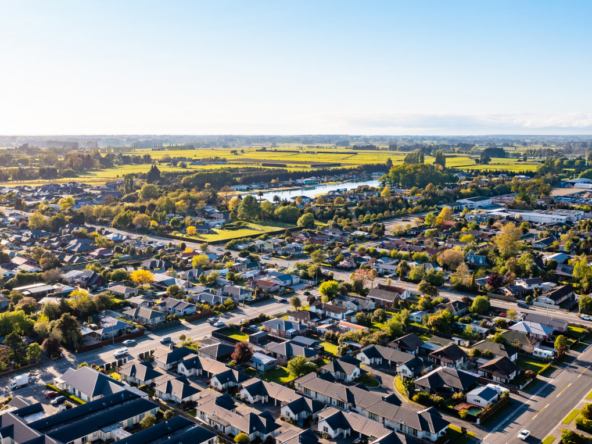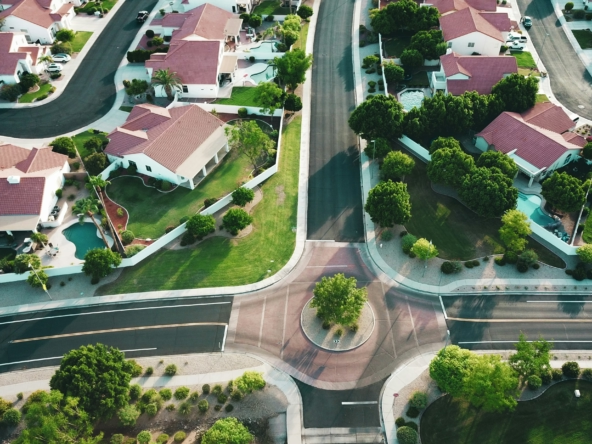
If you are asking is Rolleston a good place to live in 2026, the practical answer is yes for a lot of Canterbury buyers – especially first-home buyers chasing value, families needing more space, and investors who want modern stock in a high-growth district. Rolleston is no longer just a fringe option. It is a large, fast-maturing town with schools, retail, recreation, and housing depth that many smaller satellite suburbs cannot match.
At Tailored Homes, we have spent 16 years delivering more than 100 homes across Canterbury. We are not commenting from a distance. We build here, sell here, and see what buyers actually prioritise on the ground. In 2026, the wider backdrop also matters: the Reserve Bank of New Zealand (RBNZ) confirmed on 8 April 2026 that it held the Official Cash Rate at 2.25%, which has improved confidence compared with the tighter lending environment buyers were facing a few years ago. If you want to compare active opportunities, start with our Christchurch new-build homes hub.
Why Rolleston is now one of NZ’s fastest-growing towns
Rolleston’s appeal is not hype – it is the result of sustained population growth, active council planning, and infrastructure that is gradually turning the town into a genuine urban centre.
Stats NZ 2023 Census data, as summarised by Selwyn District Council, shows Selwyn’s resident population grew from 60,561 in 2018 to 78,144 in 2023 – a 29% increase, the fastest growth of any territorial authority in New Zealand. Council’s later summary of updated Stats NZ subnational population estimates said Rolleston itself grew 9.6% in the year to 30 June 2024. In the Council’s 2025 pre-election report, Rolleston was estimated at 31,400 residents in 2024 and projected to reach 39,600 by 2034.
This matters because strong growth only helps buyers if services follow. Rolleston’s town centre project is a good example. The Rolleston Town Centre already includes Te Ara Atea, youth and sensory spaces, reserve upgrades, and a commercial build-out, with more public-space development still to come. That is why Rolleston feels different from a pure subdivision story. It is building its own centre of gravity.
Why growth matters to buyers
For owner-occupiers, growth usually means more amenities, more resale depth, and better everyday convenience over time. For investors, it can support tenant demand – but only if you buy the right product in the right pocket. We would treat Rolleston as a town with momentum, not as a suburb where every new build automatically performs the same.
Rolleston schools and family life
Rolleston works well for families because schooling, childcare, parks, and newer housing stock all line up in a way that reduces day-to-day friction.
For many buyers, the first filters are schools and childcare. Clearview Primary is a state full primary for Years 1-8, and Rolleston College is a state co-educational secondary school for Years 9-15. Both are zoned schools according to Education Counts, and Rolleston also has other newer primary options such as Lemonwood Grove and West Rolleston to support the town’s expansion.
Early childhood is another reason families keep coming back to Rolleston. Education Counts lists multiple licensed centres in town, including Active Explorers Rolleston, Neemo Childcare Centre, and WildHeart – Makuru Mata. That breadth matters when both parents work and drop-off logistics become part of the buying decision, not an afterthought.
Why school zones matter for resale
School zoning matters because it affects who can buy from you later. In family suburbs, a home inside sought-after enrolment areas often attracts a wider pool of buyers than a similar home outside zone. That does not guarantee a premium, but it can support demand and reduce friction at resale. The practical rule is simple: always confirm the current written enrolment zone before you go unconditional, because zone boundaries and enrolment policies can change.
Rolleston property market snapshot (as of 2026)
Rolleston’s 2026 property market is best described as liquid, modern, and relatively affordable by Selwyn standards – with stable rents and a wide range of new-build entry points.
According to realestate.co.nz market insights using REINZ-supplied sale data, Rolleston’s median sale price is $758,194 (as of 2026), median asking price is $778,602, and median rent is $630 per week. The same page shows 1,258 sales in the last 12 months and a 10-day median time to sale, which tells you this is an active market, not a thin one.
New build vs existing stock
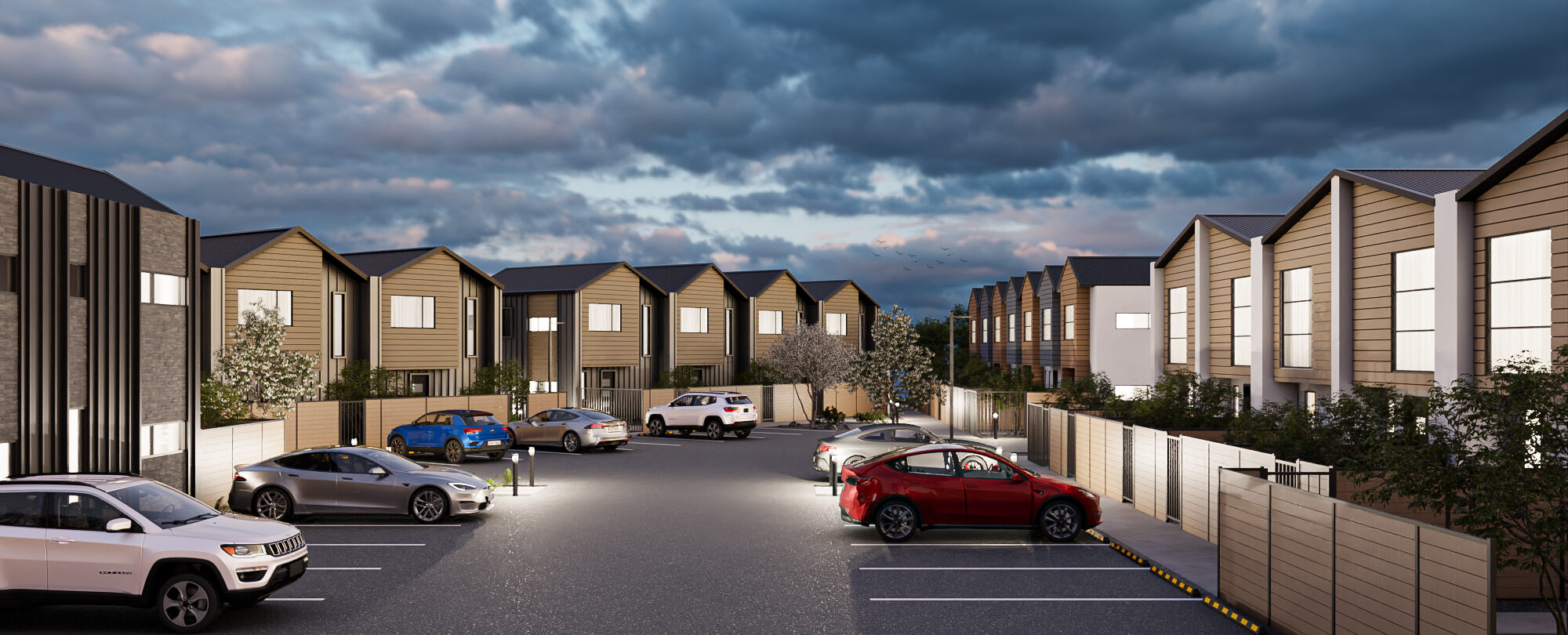
In Rolleston, the premium for new builds is usually real but not extreme. The bigger distinction is product type. Compact new townhouses sit at one end, while full family homes on larger sections sit at the other. Our own Broadway Parade project shows the lower-maintenance end of that spectrum: the featured Rolleston townhouse at 50 Broadway Parade started from $570,000 and offered two bedrooms, two bathrooms, freehold titles, Bosch appliances, heat pumps, digital keyless entry, engineered stone benchtops, EV-ready parking, and fixed-price turnkey contracts.
At the standalone end, public 2026 Rolleston listings show new three-bedroom homes commonly in the low-to-mid $700,000s, with four-bedroom family homes often moving into the mid-$800,000s depending on section size and spec. That means buyers do not always pay a huge premium for a brand-new home compared with later-model resale stock – especially once lower maintenance, warmer construction, and current code compliance are factored in.
2024-2026 trajectory and rental demand
The 2024-2026 story has been stability rather than a runaway spike. Rolleston’s median sale price is up 3.5% year-on-year in the latest realestate.co.nz snapshot, while rents have held firm at $630 per week. That is a healthier pattern than speculative growth. For investors, it suggests Rolleston is usually better suited to steady, long-hold logic than quick-flip expectations.
Rolleston vs Prebbleton vs Lincoln
Rolleston is usually the value-and-choice option, Prebbleton is the premium village option, and Lincoln sits between them with a stronger town-and-campus feel.
Rolleston
Rolleston gives buyers the broadest range of stock and generally the lowest entry point of the three. The median sale price is $758,194 and the town now has real scale. Commute-wise, most buyers still think of Rolleston as about a 30-minute drive to central Christchurch in normal conditions, although peak traffic can push that out. The trade-off is simple: you usually get more house and more choice for your money.
Prebbleton
Prebbleton’s market insights show a median sale price of $904,375 and median rent of $740 per week (as of 2026). It feels more village-like, more established, and usually more expensive. Tailored Homes’ own Prebbleton material positions the suburb at roughly 15 minutes from Christchurch CBD, which is a genuine advantage for buyers who prioritise daily commuting.
Lincoln
Lincoln’s market insights show a median sale price of $857,918 and median rent of $658 per week (as of 2026). Lincoln often appeals to buyers who want a tighter town centre, strong community identity, and a slightly more established vibe. It is usually pricier than Rolleston, but often less premium than Prebbleton.
If your priority is best value for a new family home, Rolleston is usually the frontrunner. If your priority is shorter city access and a quieter village atmosphere, Prebbleton or Lincoln may suit better. If your priority is the widest choice of modern homes under roughly $900,000, Rolleston is hard to ignore.
What makes a good Rolleston new build in 2026
A good Rolleston new build in 2026 is practical before it is flashy – warm, low-maintenance, family-friendly, and designed around how people actually live.
For families
The strongest layouts in Rolleston tend to be three or four bedrooms, two bathrooms, north-facing living, useful storage, and either a study nook or a second living area. On family sections, buyers still value space for off-street parking, easy outdoor flow, and enough lawn to use without creating a maintenance burden. Homes built to the current New Zealand Building Code, including newer H1 energy-efficiency requirements, are a meaningful step up from older stock when warmth and running costs matter.
For investors and downsizers
Compact, well-specified townhouses make sense when the brief is lower maintenance and tenant appeal rather than maximum floor area. That is exactly why our Rolleston townhouse development at Broadway Parade resonated: 26 architecturally designed homes, around 75-82sqm, with two bedrooms, two bathrooms, one car park, good natural light, and practical features buyers and tenants actually notice.
If you are comparing live options, browse Rolleston new homes for sale and pay attention to location, school proximity, layout efficiency, parking, and section usability. Bigger is not always better. Better-planned is usually better.
Buyer process: section + build vs turnkey
For most 2026 buyers, the real decision is not whether to build – it is whether you want more control with a section-and-build path or more simplicity with a turnkey contract.
Section + build
This route gives you more control over plan, orientation, finishes, and section choice. It also takes longer and requires more moving parts. Depending on title timing, consent, and builder programme, a realistic end-to-end timeframe can be around 9-14 months or more. Deposit structure also varies: you may pay a deposit on the land first, then fund the build through progress payments. If you want more detail, our deposit guide for building breaks that down.
Turnkey
Turnkey is simpler. You lock in a finished product, pay an agreed upfront deposit, and settle when the home is complete. For many first-home buyers, that reduces complexity and makes budgeting easier. As a simple reference point, a 5% deposit on a $650,000 home is $32,500. Our 5% deposit guide and new-build tax benefits guide are useful follow-on reads depending on whether you are buying to live in or invest.
RBNZ policy is also relevant here. The Bank’s LVR rules timeline and construction exemption guidance confirm that qualifying new-build lending can sit outside the standard LVR speed limits. That does not mean every buyer gets low-deposit approval automatically. Banks still apply their own servicing, valuation, and risk rules.
If you are weighing up Rolleston seriously, the next step is to compare actual stock rather than broad suburb headlines. Explore Rolleston new homes for sale, review the wider Christchurch new-build homes market, and talk to Tailored Homes about whether a turnkey home or a section-and-build path fits your budget, deposit, and timeline.
FAQ
Is Rolleston a safe place to live?
Rolleston is generally viewed as a family-oriented town with modern housing and strong amenities, but buyers should still check the specific street, access, lighting, and recent local crime data before committing.
What is the median house price in Rolleston?
The latest realestate.co.nz market insights in this article show a median sale price of $758,194 (as of 2026).
Is Rolleston a good investment suburb?
It can be a solid long-term hold for buyers seeking modern stock in a high-growth district, but yields are usually moderate and the case is stronger for steady demand than quick gains.
What’s the commute time to Christchurch CBD?
Many buyers budget around 30 minutes by car from central Rolleston to Christchurch CBD in normal traffic, although peak conditions can take longer.
How does Rolleston compare to Lincoln for families?
Rolleston usually gives families more housing choice and a lower entry price, while Lincoln often offers a tighter town centre and stronger village feel at a higher price point.