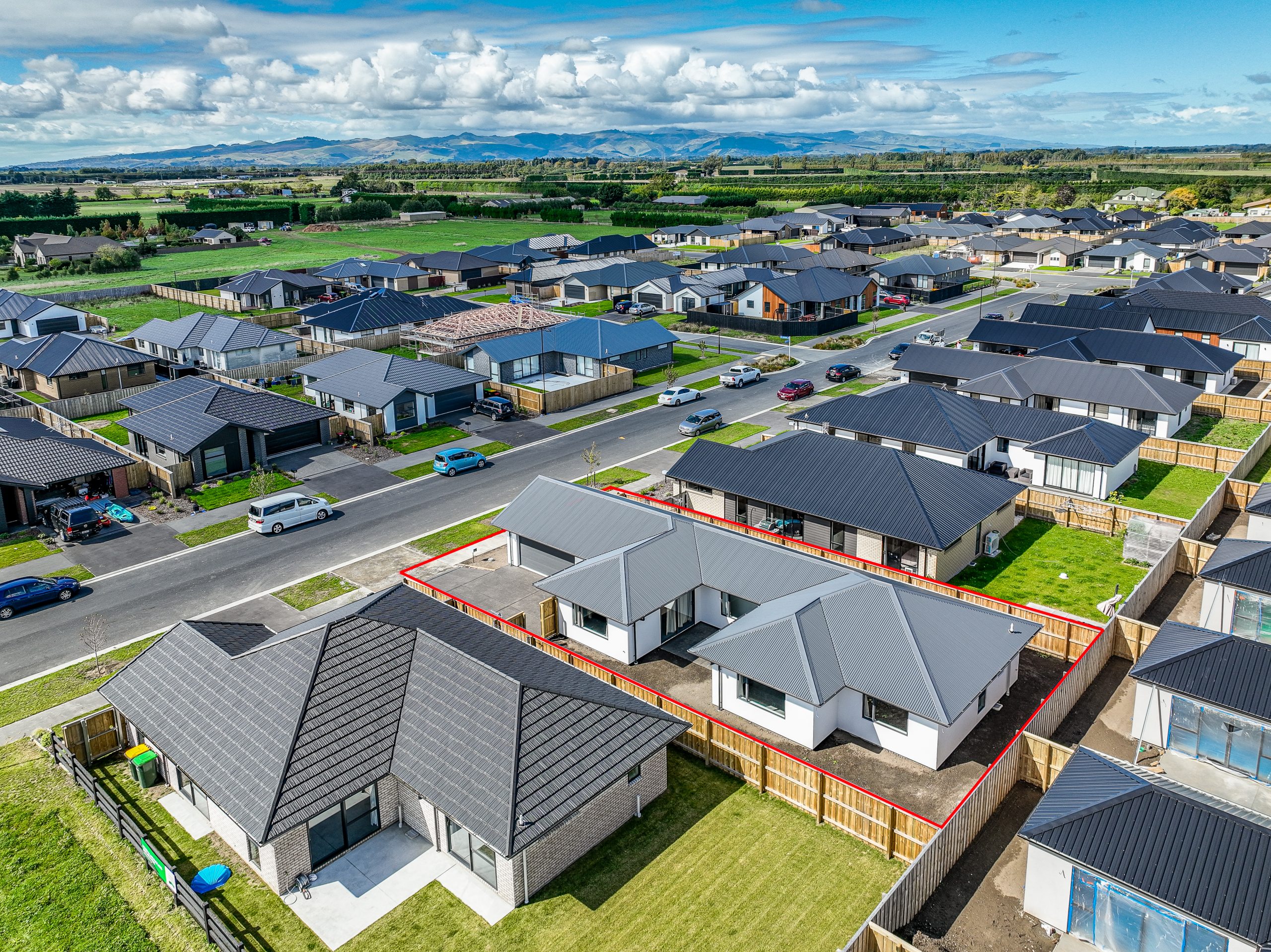
Lincoln has moved from quiet university town to one of the most closely watched buyer pockets in Selwyn. For first-home buyers, families, and Christchurch commuters, the appeal is straightforward: you get a genuine small-town rhythm, strong schooling, and a cleaner day-to-day lifestyle without feeling remote from the city. At Tailored Homes, we have spent 16 years building across Canterbury and delivered 100+ homes, so we see what buyers actually compare when Lincoln, Rolleston, and Prebbleton are all on the shortlist. This guide focuses on what matters in 2026: price points, school zones, commute reality, and what a practical new build in Lincoln really looks like.
Why Lincoln is on every Canterbury buyer’s shortlist in 2026
Lincoln stands out in 2026 because it combines a village feel, strong education identity, and an easy Christchurch commute in a way few Canterbury towns do.
Lincoln sits in the Selwyn District, one of New Zealand’s fastest-growing areas, and buyers can feel that growth on the ground. The mix is what makes it work: established streets, a university presence, newer subdivisions, and a town centre that is actively being upgraded by Selwyn District Council. The wider growth story is reflected in the Stats NZ Selwyn District summary, while the council’s own Lincoln planning work expects household growth to rise from 3,500 in 2022 to 6,000 by 2040.
For commuters, Lincoln’s location is a major part of the draw. Earlsbrook’s location guidance and broader local market material consistently place the drive to Christchurch CBD at about 25 minutes, which is why Lincoln keeps attracting buyers who want more breathing room without taking on a long-haul commute. If you are comparing Lincoln with other city-edge options, our Christchurch new-build homes hub is a useful way to benchmark Lincoln against the wider Canterbury market while keeping commute trade-offs in view. You are also close enough to Rolleston to use its retail and service base when you need bigger stores, while still coming home to a noticeably quieter, more education-led town.
Price is the other reason Lincoln stays on the shortlist. In our current Earlsbrook release, brand-new standalone homes range from $759,000 to $879,000 (as of 2026), which gives buyers a realistic live-market benchmark rather than a theoretical one. That is not bargain-basement Canterbury anymore, but it is still a compelling entry point for buyers who want a new home, a quality school pipeline, and a more settled feel than some faster-moving growth areas.
Lincoln schools at a glance
Lincoln appeals to family buyers because the town offers a rare primary-to-secondary-to-tertiary education story in one place.
Lincoln Primary and the Year 7-8 question
One thing buyers should understand early is that Lincoln Primary School is a zoned full primary, which means it covers Years 1-8. In practical terms, that removes the separate intermediate move many families expect elsewhere. If you are searching for a Lincoln intermediate, that is usually why the answer feels unclear: many local children simply stay within the full-primary pathway before moving to secondary school.
That matters to demand. Zoned schooling gives families more certainty, and certainty tends to support stronger owner-occupier appeal. When we talk with buyers in Lincoln, school access is rarely a small detail. It is often one of the main reasons Lincoln beats out other suburbs.
Lincoln High School and zone-driven demand
Lincoln High School operates a home zone, and the school is clear that in-zone students are entitled to enrol while out-of-zone applications are handled through the usual priority and ballot system. For buyers, that means address choice can have a direct effect on schooling options. Homes inside the practical school catchment tend to attract more consistent family interest, especially from buyers planning to stay put through multiple schooling stages.
Lincoln University gives the town its identity
Lincoln is not just a town with schools. It is a research town. Lincoln University gives the place a different feel from many other Canterbury growth areas: more academically anchored, more land-based, and more connected to agriculture, environment, and food-sector research. That identity shows up in who chooses to live here. Families like the education pipeline, professionals like the calmer atmosphere, and many buyers simply prefer a town with a stronger sense of purpose than a pure dormitory suburb.
Lincoln vs Rolleston vs Prebbleton
Lincoln is usually the quieter, more education-oriented choice; Rolleston is the biggest and most retail-heavy; Prebbleton sits closer to Christchurch with a polished village feel.
The table below gives a quick head-to-head view for buyers comparing the three.
| Suburb | Indicative 2026 price band | Typical section and land feel | Commute | Retail amenities | Community feel |
|---|---|---|---|---|---|
| Lincoln | Current Tailored Homes new-build examples at $759k-$879k | Mix of efficient new lots and larger established family sections | About 25 min to Christchurch CBD | Good daily essentials in town; many residents still use Rolleston for bigger retail runs | Quieter, education-led, village and research-town atmosphere |
| Rolleston | Broader market with lower attached-home entry points and lots of family-home stock | The widest variety, from compact attached product to larger family sites | Roughly 20-25 min to Christchurch CBD | Strongest retail and big-box offer in Selwyn | Busier, larger, more urbanised growth hub |
| Prebbleton | Current Tailored Homes family homes from $849k+ | Family-oriented sections, often compact-to-mid size in new estates | About 15-20 min to Christchurch CBD | Village amenities locally, Christchurch close for everything else | Established village feel with strong family appeal |
The important point is that buyers are not choosing between better and worse suburbs. They are choosing between different lifestyles. If you want scale, retail convenience, and maximum stock choice, Rolleston makes sense. If you want the shortest drive toward Christchurch and a polished village setting, Prebbleton is strong. If you want a calmer town with school credibility, university identity, and a slightly more tucked-away feel, Lincoln often comes out in front.
What a new build in Lincoln actually looks like
A Lincoln new build in 2026 is usually less about flashy excess and more about efficient family design, durable materials, and low-maintenance living.
At Tailored Homes, our clearest live example is Earlsbrook. A good starting point is Lot 93 Earlsbrook three-bedroom new build in Lincoln, a three-bedroom, two-bathroom house and land package priced at $759,000 (as of 2026). It includes a 144.55sqm build on 354sqm of land, open-plan living, a double garage, a walk-in pantry, a walk-in wardrobe, and a fully landscaped section. For many first-home buyers and young families, that is exactly the sweet spot: enough space to live properly, without stepping into a section size that becomes a weekend maintenance project.
If you want more room, the same subdivision shows how the product steps up. Lot 98 is a larger three-bedroom, two-living turnkey home at 165.35sqm on 355sqm of land, priced at $815,000 (as of 2026). Lot 99 pushes into Home-and-Income territory with four ensuites across 169.56sqm on 355sqm of land at $879,000 (as of 2026). That spread tells you a lot about the Lincoln buyer pool: some want a practical first-home layout, some want a family upgrade, and some are thinking about flexible occupancy and investment use from day one.
Material choices matter too. In our current Earlsbrook homes, buyers are seeing James Hardie cladding, AAC panel systems, BOSCH appliances, stone benchtops, Methven tapware, Mitsubishi heating, tiled splashbacks, full landscaping, and security features already included. That matters because a new build should feel complete, not like a long list of post-settlement extras. Beyond finishes, all new homes still need to meet the performance requirements of the New Zealand Building Code, including current Clause H1 energy-efficiency requirements. For buyers, that usually means a warmer, drier, easier-to-run home than much of the older resale stock.
If you want to see what is live right now, browse our new homes in Lincoln and compare the layouts side by side. It is the fastest way to understand how Lincoln product is being packaged in the current market.
Lifestyle: cafes, parks, sport, and everyday convenience
Living in Lincoln Canterbury works best for buyers who want daily convenience without the noise and pace of a larger centre.
Lincoln is easy to live in. The town centre covers the day-to-day basics, the cafe culture is local rather than overdone, and the public spaces are a real part of the appeal. Selwyn District Council’s Lincoln township profile highlights Liffey Stream, Lincoln Wetlands, and the town’s parks and reserves, and that description feels accurate on the ground. For families, the lifestyle case gets stronger again with the Lincoln Event Centre, nearby recreation programmes, and community facilities like the Lincoln skate park by the event centre.
There is also a social side to the town that buyers notice quickly. The Lincoln Farmers and Craft Market gives the place a real local rhythm, and the town still feels like somewhere you run into people rather than drive past them. For bigger-box shopping, expanded retail choice, or a heavier service run, many Lincoln residents still head to Rolleston. That is part of Lincoln’s appeal rather than a weakness: you keep the quieter home base and borrow the bigger centre when you need it.
Buyer process for a new build in Lincoln
The smartest Lincoln buying path depends on whether you want design freedom, price certainty, or the fastest move-in timeline.
Section plus build vs turnkey
A section plus build pathway gives you more influence over layout, finish level, and how the home fits your life. It suits buyers who want to shape the outcome and are comfortable with a longer decision process. A turnkey home is simpler. Your deposit structure is often clearer, the plans are already resolved, and you are buying a finished product rather than managing dozens of moving parts. In a place like Lincoln, both routes are viable. The right answer depends less on theory and more on your cash flow, time pressure, and appetite for decision-making.
Finance matters here too. The Reserve Bank of New Zealand notes that construction loans and newly built homes purchased from a developer within six months of completion are exempt from standard LVR restrictions, although banks still apply their own lending and serviceability tests. That is useful, but it is not a blank cheque. For example, a 5% deposit on a $759,000 home is $37,950, and whether that is enough in practice will depend on the lender, your income, and the product structure. The financing backdrop is a little friendlier than it was a year ago as well: the Reserve Bank of New Zealand held the Official Cash Rate at 2.25% on 8 April 2026, which has helped improve buyer confidence compared with the peak tightening cycle.
From a planning perspective, buyers should also understand the zoning context. The current framework is the Partially Operative Selwyn District Plan, and the council’s 2024 Residential Development Design Guide explains that a Medium Density Residential Zone now applies across Lincoln, Rolleston, and Prebbleton residential areas. That does not mean every site behaves the same way, but it does mean zoning, overlays, and subdivision rules should be checked early, not after you have mentally moved in.
If you are still comparing locations, our wider Christchurch new-build homes hub is a useful place to benchmark Lincoln against other Canterbury options before you commit.
FAQ: Living in Lincoln Canterbury
These are the five questions we hear most often from buyers considering Lincoln.
Is Lincoln a good place to raise a family?
Yes. Lincoln is one of the stronger family choices in Selwyn because it combines a calmer town feel with zoned schooling, parks, sports facilities, and a manageable Christchurch commute. The full-primary pathway and Lincoln High School zone are a big part of that appeal.
What’s the median house price in Lincoln?
Broader suburb-wide medians change month to month and vary by source, but buyers looking specifically at current brand-new standalone stock in our Lincoln range are seeing live price points from $759,000 to $879,000 (as of 2026). That is the more useful benchmark if your plan is to buy new rather than renovate older stock.
How long does a new build in Lincoln take?
As a rule of thumb, allow around 8 to 12 months for a house and land package once plans, consent, and build timing are lined up. Turnkey homes already under construction can be quicker. If title has not issued yet, add more time.
Is Lincoln or Rolleston better for investors?
It depends on the strategy. Rolleston usually wins on scale, tenant depth, and retail convenience. Lincoln often appeals when you want a quieter, education-driven location with strong owner-occupier resale appeal. We would not call one universally better; the right fit depends on yield goals, tenant profile, and exit plan.
What is Lincoln zoned for in the Selwyn District Plan?
Most residential Lincoln land now sits within Selwyn’s Medium Density Residential Zone framework, with separate town centre, business, education, reserve, and infrastructure areas around it. Always check the exact property maps and overlays before buying, because site-specific rules still matter.
Lincoln keeps attracting buyers for a reason: it feels balanced. You are not buying into a purely speculative growth story or a sleepy town with no momentum. You are buying into a place with schools, identity, practical commuting, and a live new-build pipeline. If that sounds like your kind of move, browse our new homes in Lincoln and see what is currently available.