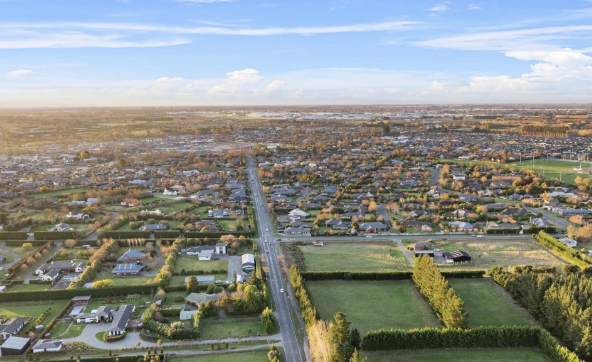
Choosing between a new build and an existing home in Christchurch is usually a trade-off between lower upfront price and established land on one side, and lower maintenance, warmer performance, cleaner paperwork, and builder-backed protection on the other. In the new build vs existing home Christchurch decision, there is no universal winner; the better option is the one that fits your deposit, your timeline, and how much uncertainty you are prepared to absorb after settlement. In Christchurch, that often looks like a turn-key Wigram or Prebbleton build versus an older home in an established suburb that may offer more land but also more unknowns.
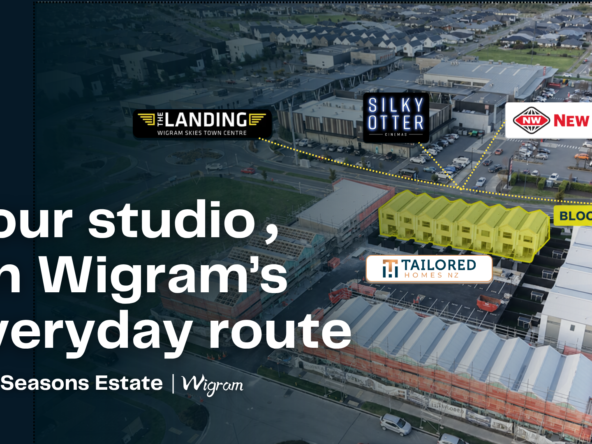
At Tailored Homes, we have been building across Christchurch and Canterbury since 2010 and have delivered more than 100 homes, from freehold Four Seasons Estate townhouses in Wigram to standalone family homes in Prebbleton. This guide is written for owner-occupiers rather than landlords, so if you want the tax and yield version of the same debate, start with our investor-focused comparison. The timing matters in 2026 because Cotality’s Westpac First Home Buyer Report said first-home buyers accounted for 27.5% of all sales in Q1 2026 (as of 2026), near a record share.
Headline differences: warranty, Healthy Homes, energy efficiency, and compliance
The headline difference is simple: new builds usually buy you certainty and performance, while existing homes usually buy you land, maturity, and a lower sticker price.
Warranty protection
With a quality new build, one of the clearest advantages is warranty cover. Tailored Homes backs its homes with a Master Build 10-Year Guarantee, and Registered Master Builders says that cover can include loss of deposit, non-completion, materials and workmanship cover for 2 years, and structural defects cover for 10 years. An existing home usually does not come with equivalent builder-backed protection unless there is a transferable guarantee still in force, so your risk shifts more toward pre-purchase inspections, vendor disclosures, and the condition of the house on settlement day.
Warmth, health, and energy performance
New homes also start from current-code performance. The Ministry of Business, Innovation and Employment (MBIE) says all new building work must comply with the New Zealand Building Code, including Clause H1 Energy efficiency. In practice, that generally means better insulation, tighter envelopes, improved glazing performance, modern ventilation, and more predictable heating than much of Christchurch’s older stock. An existing home can still be warm and efficient, but only if it has actually been upgraded, not just cosmetically renovated.
Council compliance and paperwork
The paperwork position is different too. A new home should move through Christchurch City Council consent, inspections, and a code compliance certificate, which confirms the council is satisfied on reasonable grounds that the work complies with the building consent. With an existing home, the original house may be fine but later decks, garage conversions, bathroom relocations, or removed walls can create due-diligence risk if the files are incomplete. That does not make older homes bad buys; it just means you need to check the LIM, title, and building file more carefully.
Cost comparison 2026: new build at $750k vs existing at $700k
The 2026 cost comparison is usually an upfront-premium-versus-future-spend decision, not a simple cheap-versus-expensive decision.
CoreLogic, now trading as Cotality, put Christchurch’s median property value at $701,152 in February 2026 (as of 2026). By contrast, our own Christchurch cost planning for 2026 shows that about $750,000 total usually buys a compact new standalone 3-bedroom home of roughly 135-150m2 on a standard site (as of 2026). That is the worked example in this article, not a promise that every brief or suburb will land there. For broader suburb, pricing, and supply context, see our Christchurch market trends 2026 overview.
- Comparable existing home: $701,152 median Christchurch value (as of February 2026).
- Worked new-build budget: $750,000 all-in planning figure (as of 2026).
- Upfront price gap: $48,848.
- 10% deposit gap: about $4,885.
- 20% deposit gap: about $9,770.
That gap matters, but so does what it buys. In our experience, the new-build premium is often paying for lower repair risk, a cleaner specification, better thermal comfort, and fewer surprise invoices in years one to five. For a first-home buyer in Christchurch, that can also mean preserving cash for legal fees, landscaping, appliances, and moving costs instead of having to fund a renovation immediately after settlement. The existing-home discount can be real value too, especially if the house is structurally sound, the section is stronger, and the upgrades you need are limited.
New-build pricing is also not one thing. In our current stock, freehold Wigram townhouses start from $617,000 and Prebbleton standalone family homes from $849,000 (as of 2026), which shows why buyers need to compare like with like rather than treat every new build as the same product type.
Finance conditions can also move the balance. The Reserve Bank of New Zealand (RBNZ) held the Official Cash Rate at 2.25% on 8 April 2026, which helps serviceability versus the peak-rate period, but buyers should still model repayments with a buffer rather than assume today’s rates will hold through their next refix.
Healthy Homes Standards advantage
The Healthy Homes advantage is less about legal compliance for owner-occupiers and more about getting the comfort upgrades upfront instead of retrofitting them later.
The MBIE Tenancy Services Healthy Homes standards require heating, insulation, ventilation, moisture ingress and drainage control, and draught stopping in rentals. Those are technically rental standards, but they overlap heavily with what owner-occupiers actually notice in winter: whether the lounge heats properly, whether the bathroom clears steam, whether the floor feels cold, and whether moisture sits in corners and wardrobes.
This is where many older homes lose on real-life comfort. Existing landlords often end up paying for fixed heating, extractor fans, insulation top-ups, ground moisture barriers, and draught fixes to bring older stock into line. In a quality new build, much of that work is already embedded in the design, consent, and handover specification. Our Four Seasons Estate Wigram homes, for example, are marketed as Healthy Homes compliant from day one, alongside Mitsubishi heat pumps, modern extraction, and low-maintenance cladding (as of 2026).
The fair counterpoint is that a well-renovated existing home can absolutely feel better than a mediocre new build. If an older house has been properly insulated, re-ventilated, rewired, and dry-lined, the gap narrows fast. The mistake is assuming every tidy listing has had those hidden upgrades just because the kitchen looks new.
Maintenance over 10 years
Maintenance over the first 10 years is where many buyers quietly make or lose money on the comparison.
A new build is not maintenance-free, but it is usually maintenance-light. For a well-built home, a practical allowance is around $1,000 per year for servicing, touch-ups, minor fixes, and the ordinary little costs that still exist after handover (as of 2026). Some years will be less; some years you might replace an appliance sooner than planned.
A 30-plus-year-old home is a different budgeting exercise. A realistic rolling allowance is often $3,000 to $6,000 per year in Christchurch if you are being honest about exterior painting, roofing, drainage, plumbing, heating upgrades, flooring, fencing, and the occasional ugly surprise behind walls or under floors (as of 2026). The biggest trap is averaging that number too literally: you may spend almost nothing for two years, then get hit with a $15,000 to $30,000 year.
Christchurch adds one more layer. On older stock, buyers should read the earthquake repair, insurance, and building history closely, because a house can be cosmetically neat and still have a messy paper trail or a deferred issue. If you are handy, patient, and happy managing trades, that risk can be worth it. If you want predictability and your weekends back, the new-build premium can be money well spent.
Resale considerations
Resale is mostly about hold period, land scarcity, and product quality, not simply whether the property was new when you bought it.
How new builds can depreciate
New builds can dip early if you pay a fresh-build premium and then sell again before the market has time to absorb it. That is especially true when there are many near-identical townhouses completing at once, because buyers can compare your home directly against brand-new alternatives. The building itself also starts ageing from day one, while the land component does most of the long-run heavy lifting.
That said, the Christchurch resale backdrop has been relatively resilient. Cotality’s Pain and Gain Report said only 4.7% of Christchurch resales were made at a loss in Q1 2026, with a median loss of $32,000 (as of 2026). New builds hold up best when they are freehold, well-located, easy to heat, and designed around real daily use rather than headline flash. None of that guarantees a better resale result; short holds are still riskier in either category.
When existing-with-land outperforms
Existing homes can outperform when the land is the real asset. A larger freehold section in an established suburb, good school-zone access, mature streetscape, and genuine add-value potential can beat a brand-new property on a tighter site over a longer hold. That is the strongest case for buying older: not because old is automatically better, but because scarce land in a proven location is hard to reproduce.
The trade-off is that charm and upside usually come bundled with maintenance, retrofit spend, and more due diligence. If you are buying an older home because it has character, make sure you are also comfortable funding the insulation, heating, glazing, drainage, or layout improvements that character homes often still need.
Decision matrix for first-home buyers and upgraders
For first-home buyers and upgraders, the right choice is usually the one that leaves enough cash, enough certainty, and enough lifestyle margin after settlement.
- A new build usually fits better if: you want predictable costs, lower maintenance, warmer day-to-day living, cleaner consent paperwork, and a home that is ready to move into without a renovation phase.
- A new build usually fits better if: you are comfortable trading some land or inner-suburb scarcity for simplicity, efficiency, and a newer streetscape.
- An existing home usually fits better if: you value section size, established trees, character, school-zone positioning, or a tighter upfront purchase price more than turnkey convenience.
- An existing home usually fits better if: you have cash left for upgrades, you can manage uncertainty, and you see real upside in improving the property rather than needing it perfect on day one.
In our own Christchurch work, that split is clear. Buyers who want low-maintenance, walkable living often gravitate to Wigram. Buyers who want more family scale and freehold standalone living tend to prefer Prebbleton. If you want a home shaped around your brief rather than a stock compromise, our Christchurch custom home builder team can help you price the real gap between buying existing and building new.
FAQ
The quick answers below cover the five questions we hear most often from Christchurch buyers.
Is a Master Build Guarantee transferable?
Yes, in many cases. Registered Master Builders says a guarantee can be transferred within its 10-year life, and the new owner must apply within 90 days of settlement. The current transfer fee is $400 including GST, while the first transfer from a development company to the first homeowner is free if lodged within 90 days of settlement (as of 2026).
Can an existing home be retrofitted to Healthy Homes standards cost-effectively?
Sometimes, yes. If the house already has decent wiring, dry subfloors, accessible ceiling space, and reasonable joinery, a retrofit can be cost-effective. If it also needs moisture work, major heating changes, insulation replacement, extraction, and wider repairs, the economics get harder very quickly.
Do new builds have an LVR advantage?
Often, yes. The Reserve Bank of New Zealand (RBNZ) says construction loans and purchases of newly built homes from a developer within 6 months of completion are exempt from the LVR speed limits. That does not mean automatic low-deposit approval, but it can make the bank conversation easier than an equivalent older property.
What if I want character and charm?
Then an existing home may be the better fit. Just treat charm as a lifestyle benefit, not proof of performance. Beautiful villas and bungalows can still need serious work on insulation, heating, moisture control, and layout efficiency.
Do all new builds come with body corporate fees?
No. Many standalone homes and some townhouses are freehold and have no body corporate at all. Apartments and unit-title developments are more likely to have body corporate or shared management costs, so always check the title structure before comparing new builds against older homes.
Still deciding? Talk to Tailored Homes about your new-build vs existing decision. We can help you compare a Christchurch existing-home purchase, a house-and-land package, or a custom build against the same budget and lifestyle brief.