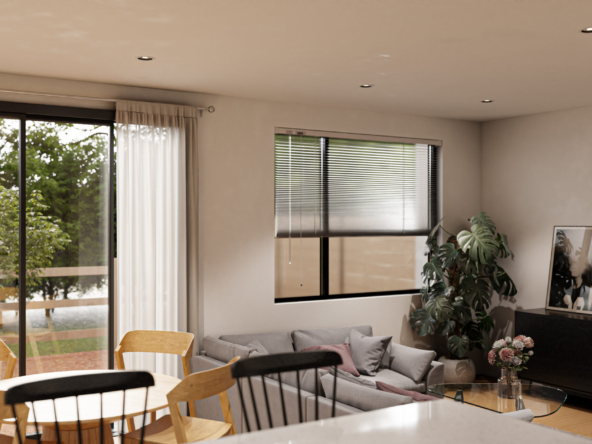
If you are assessing an investment property Halswell opportunity in 2026, the suburb makes the most sense as a balanced long-hold play rather than a pure cash-flow chase. Halswell sits in Christchurch’s southwest growth corridor, has modern housing stock, strong family appeal, and better day-to-day amenity than many outer-town alternatives. The trade-off is that it will not usually beat the best investor-targeted townhouse stock in nearby Wigram on raw yield.
That balance matters in the current cycle. The Real Estate Institute of New Zealand (REINZ) reported Canterbury remained one of the steadier regional markets through March and April 2026, while Cotality NZ (formerly CoreLogic) recorded Christchurch values rising 0.6% in March 2026. Trade Me Property’s suburb profile puts Halswell’s median HomesEstimate at $830,000 with 4% annual capital growth and 183 properties listed for sale (as of May 2026). Treat every rent, price and yield figure below as a 2026 indicator, not a guaranteed outcome.
Halswell’s investor appeal – growth profile, demographic, supply trends
Halswell appeals to investors because it combines southwest Christchurch growth, modern housing stock, and a family-led rental base rather than short-term hype.
At suburb level, the numbers are still supportive. Trade Me Property shows Halswell with a median HomesEstimate of $830,000, annual capital growth of 4%, and 786 sales in the past 12 months (as of May 2026). At city and regional level, REINZ said Canterbury’s House Price Index sat just 0.03% below peak in March 2026, and earlier in February 2026 Christchurch City recorded a territorial-authority median price record of $735,000. That is not boom-market language; it is resilience.
The demographic case is just as important. Christchurch City Council reports that 67% of occupied households in the city are family households and 73% of dwellings are separate houses (as of 2026, using 2023 census-based council reporting). Halswell fits that profile cleanly: parks, practical schooling options, modern subdivisions, and housing that generally suits young families or dual-income professionals who want space without moving fully out into Selwyn.
Infrastructure is also catching up with growth, which is what investors want to see. Christchurch City Council says the southwest of Christchurch is expected to absorb 35,000 more people over the next 30 years. The Halswell Junction Road extension opened in late May 2025, and bus-lane planning continues along the Lincoln Road and Halswell Road approach corridors. In other words, this is not a forgotten fringe suburb. It is an area the city is actively servicing because the demand base is already there.
The main supply-side caution is that Halswell is no longer an undiscovered pocket. Investors are buying into a maturing suburb. That typically means steadier tenant quality and better long-term liquidity, but it can also mean less upside in gross yield than purpose-built investor stock elsewhere in the southwest corridor.
Typical 2026 rents and gross/net yields – by dwelling type
In 2026, Halswell usually screens as a high-3% to mid-4% gross-yield suburb, with the best raw returns on smaller attached dwellings and the deepest tenant demand in 3-4 bedroom family homes.
Public suburb-level rent data is patchy, so the most useful approach is to combine Trade Me Property suburb data, Christchurch rent indices, and representative Halswell property estimates. Trade Me’s April 2026 Rental Price Index also showed Christchurch’s 3-4 bedroom houses reached a record $660 per week, which is a useful benchmark for the family-home segment.
- 2-bedroom attached or entry-level stock: Representative Halswell estimates currently sit around $485,000-$540,000 with rents around $410-$520 per week (as of 2026). In practice, that usually places gross yield in the mid-4% range. This is where Halswell’s strongest raw yield tends to sit, although newer freehold townhouse stock will usually cost more than older unit-title or small attached dwellings.
- 3-bedroom modern homes: Representative modern stock is commonly estimated around $740,000-$825,000 with rents of roughly $540-$700 per week (as of 2026). That usually translates to gross yields around 3.9%-4.2% on sensible purchase assumptions. This is the core investor segment in Halswell because it matches the suburb’s dominant tenant pool.
- 4-bedroom family homes: Larger modern homes commonly sit around $845,000-$940,000 with rents roughly $600-$770 per week (as of 2026). Gross yields are usually around 3.8%-4.1%. The yield is rarely spectacular, but the tenant depth is strong when the layout, heating, storage and outdoor space are right.
Net yield matters more than gross yield in a suburb like Halswell. Once you allow for council rates, insurance, property management, maintenance and a modest vacancy buffer, many investors should expect around 0.8 to 1.2 percentage points to come off gross yield. That leaves a lot of Halswell stock in the high-2% to mid-3% net-yield range before interest and tax (as of 2026).
This is why we treat Halswell as a total-return suburb more than a pure cash-flow suburb. If you want to test your own numbers rather than rely on suburb averages, use our Christchurch rental yield calculator and run the rent, deposit and interest assumptions yourself.
Tenant pool profile – families, professionals, who tends to rent in Halswell
Halswell’s rental demand is driven mainly by families and dual-income professionals, not by students or short-stay churn.
Trade Me Property describes Halswell as a family-friendly suburb with established schools, green space, and a 15-20 minute drive to central Christchurch (as of 2026). That matches what investors see on the ground. Renters choosing Halswell are usually paying for practical lifestyle: school access, garage space, safer-feeling streets, open-plan living, and enough outdoor area for children rather than large-lot upkeep.
The citywide demographic data supports that positioning. Christchurch City Council says the average household size is 2.5 people, 67% of private occupied households are family households, and 59% of commuters still travel by private vehicle, while 13% usually work from home (as of 2026, from council-reported 2023 data). For landlords, that means the rent-ready spec in Halswell is predictable: off-street parking, a genuine second bathroom where possible, storage, good heating, double glazing, and a flexible third or fourth bedroom that can double as a home office.
Trade Me’s February 2026 rental data also showed Christchurch city demand up 15% year-on-year while supply was down 5%. By April 2026, the city’s 3-4 bedroom rent had hit that record $660 per week. That does not prove every Halswell property will lease instantly, but it does show the family-home category remains competitive.
Across the homes we build and review in the southwest corridor, the best-performing rental layouts are not complicated. Tenants respond to a functional kitchen, durable flooring in high-wear areas, storage that feels real, a fenced outdoor zone, and bedrooms sized for actual furniture. In Halswell, those details support both rentability and lower turnover.
Supply pipeline 2026-2027 – what’s coming, what’s been absorbed
Halswell’s 2026-2027 supply story is active but not reckless: more homes are coming, yet the corridor is still absorbing stock.
At city level, Christchurch City Council says building consents were issued for 3,700 new dwellings and units in the year ending December 2025, of which 3,100 were net additions to the housing stock (as of 2026). That is a meaningful pipeline. Investors should assume new supply will continue to act as a brake on extreme rent spikes and on any short-term FOMO pricing.
But supply is not the same thing as oversupply. Halswell’s own turnover remains solid. Trade Me currently shows 183 homes listed for sale and 786 sold in the previous 12 months (as of May 2026). That is not a formal absorption ratio, but it is a useful signal that the suburb is still moving.
There is also more land-based development coming through the corridor. On 13 April 2026, Kāinga Ora confirmed the sale of a 3.68-hectare site at 66A Quaifes Road, Halswell for future residential land development. That does not mean an immediate flood of rental stock, but it does reinforce the point that Halswell remains a growth area with active land-release pathways.
The investor takeaway is simple: watch product mix, not just dwelling count. Another cluster of 2-bedroom townhouses affects the market differently from staged releases of 4-bedroom family homes on larger sections. In Halswell, the family segment has held up better than broad suburb averages suggest, which is why rent pressure in larger homes has remained firm even while supply has stayed healthy.
Comparable suburbs – Halswell vs Wigram vs Lincoln yield differences
Halswell sits between higher-yield Wigram and higher-price Lincoln in the southwest corridor.
- Halswell: Trade Me shows a median HomesEstimate of $830,000 and 4% annual capital growth (as of May 2026). Gross yields on mainstream stock usually sit in the high-3% to low-4% band, with the smaller attached segment performing better on paper than large standalone homes.
- Wigram: Trade Me’s suburb profile shows a median HomesEstimate of $865,000 and 1.2% annual growth (as of April 2026), but investor-grade stock there is more deliberately designed for yield. Our current Wigram project at Four Seasons Estate, 41 Deal Street, has freehold townhouses priced from $617,000, with rental appraisals up to $710 per week for 3-bed and $600 per week for 2-bed. That is why Wigram is currently achieving roughly 4.8%-5.4% gross yields on selected new-build stock (as of 2026).
- Lincoln: Trade Me shows a median HomesEstimate of $890,000 and -1.9% annual growth (as of April 2026). Lincoln remains attractive for lifestyle and schooling, but the higher entry price means yield is often more compressed unless you buy unusually well. On mainstream family stock, it tends to screen lower than Wigram and often no better than Halswell once you account for the capital required.
If the brief is pure yield, Wigram is usually cleaner right now. If the brief is balanced family-rental demand inside Christchurch City, Halswell is the middle ground. If the brief leans more toward owner-occupier-grade appeal and village positioning, Lincoln can work, but the price discipline has to be stronger.
What it means for investors – cash flow, demand, risk, exit
Halswell works best when you underwrite it as a long-hold family suburb rather than a maximum-yield trade.
Cash flow is usually acceptable rather than aggressive, so the quality of the build and the discipline of the purchase price matter more than chasing the highest advertised rent. Tenant demand is broad because the suburb appeals to families and professionals who want space without giving up city access. Holding risk is lower than in more isolated fringe areas, but you still need to avoid overcapitalising on oversized layouts or expensive finishes that renters will not pay for. Exit liquidity is helped by Halswell’s owner-occupier appeal, which matters if you want a wider resale pool later.
To pressure-test your assumptions, run the numbers through our Christchurch rental yield calculator before you compare the suburb against newer stock or older existing homes.
Tailored Homes investor-grade Halswell builds – current options
The smartest way to approach Halswell in 2026 is to separate the suburb you want from the deal structure that performs best.
We have been building in Canterbury since 2010 and have delivered more than 100 homes. Across Halswell, Wigram, Lincoln, Prebbleton and the wider Christchurch market, the investor-grade brief is consistent: durable exterior materials, practical floorplans, efficient footprints, fixed-price certainty, and build specifications that line up with the current New Zealand Building Code and modern tenant expectations. For yield-focused buyers, that usually means freehold, low-maintenance product types rather than complicated ownership structures.
At the time of writing, our live investor-focused stock is strongest in nearby Wigram rather than a named Halswell townhouse release. Four Seasons Estate at 41 Deal Street, Wigram includes 36 freehold townhouses, from $617,000, with appraised rents up to $710 per week for 3-bedroom homes and $600 per week for 2-bedroom homes, targeting Q4 2026 completion. For a Halswell investor, that matters because it creates a live southwest-corridor benchmark for entry price, rent and yield.
New builds also change the risk profile. Inland Revenue (IRD) says a qualifying new build is a self-contained residence with a Code Compliance Certificate issued on or after 27 March 2020, and off-plan purchases can qualify from the agreement date. The Reserve Bank of New Zealand (RBNZ) also exempts construction loans and newly built homes bought from a developer within six months of completion from the standard investor loan-to-value speed limit, although banks still apply their own lending criteria. On a $650,000 purchase, a 20% deposit is $130,000; a 30% deposit is $195,000. That gap matters.
If you are comparing tax profile, maintenance burden and funding strategy, read our guide on new vs existing for investors. If you want to see what is live across the market now, browse our Christchurch new builds hub.
FAQ
The main investor questions in Halswell are tax, compliance, vacancy, capital growth and ownership structure.
Can I still claim mortgage interest on a new-build investment property in Halswell?
Usually, yes, if the property qualifies under IRD’s new-build rules. IRD says the exemption applies to a self-contained residence with a Code Compliance Certificate issued on or after 27 March 2020, and for off-plan purchases the exemption can start from the agreement date. Always confirm the remaining qualifying period on the specific property.
How much Healthy Homes work should I expect on a 2026 new build?
Much less than on older stock, but not zero. Tenancy Services, part of the Ministry of Business, Innovation and Employment (MBIE), says all private rentals had to comply with Healthy Homes from 1 July 2025. New builds usually start from a much stronger position on heating, insulation, ventilation and moisture control, but landlords still need compliance statements, records and ongoing upkeep.
What are vacancy rates like in Halswell?
There is no clean public suburb-level vacancy series for Halswell that we would treat as fully reliable in 2026. The better read is from market indicators: Trade Me showed Christchurch city rental demand up 15% year-on-year and supply down 5% in February 2026, while 3-4 bedroom rents hit a record $660 per week in April 2026. Well-presented family homes in Halswell should not be treated as high-vacancy stock.
Has Halswell delivered capital growth over the past five years?
Yes, but not in a straight line. Christchurch has been one of New Zealand’s more resilient markets since 2020, Cotality NZ recorded Christchurch values rising in March 2026, REINZ said Canterbury sat just 0.03% below its HPI peak in March 2026, and Trade Me showed Halswell with 4% annual growth and an $830,000 median estimate in May 2026. That supports a resilience case, not a promise of future gains.
Do body corporate costs matter for Halswell townhouses?
Yes, if the property is unit-title. Body corporate fees, rules and long-term maintenance funds all reduce net yield. Freehold townhouses avoid that layer, which is one reason investor-grade freehold product can look cleaner on cash flow even when the headline purchase price is slightly higher.
Data note: This article references REINZ Property Reports published on 16 April and 14 May 2026, Cotality NZ commentary published on 2 April 2026, Trade Me Property suburb profiles and rental updates from February to May 2026, Christchurch City Council facts and figures, Reserve Bank of New Zealand lending rules, Inland Revenue interest limitation guidance, and Tenancy Services Healthy Homes guidance. All market figures are time-sensitive and should be checked again before purchase.
Explore Tailored Homes’ investor-grade Halswell builds. If you are weighing Halswell against Wigram or Lincoln, we can help you compare yield, tax position, build spec and long-hold fit before you commit.