Buying your first home in Christchurch is not only about chasing the lowest list price. The better question is which home type gives you the best fit for your life now and the fewest expensive compromises later. For many people searching for first time buyer homes, that means comparing maintenance, layout, location, and deposit pressure together, not one by one.
At Tailored Homes, we have spent 16 years delivering more than 100 homes across Canterbury. We are builders, not mortgage brokers, so this is general guidance rather than personal financial advice. Our team regularly sees first-home buyers focus on the headline price first, then realise too late that an older home needs major work, a tight floor plan will not suit a flatmate or future child, or a cheap location creates daily stress.
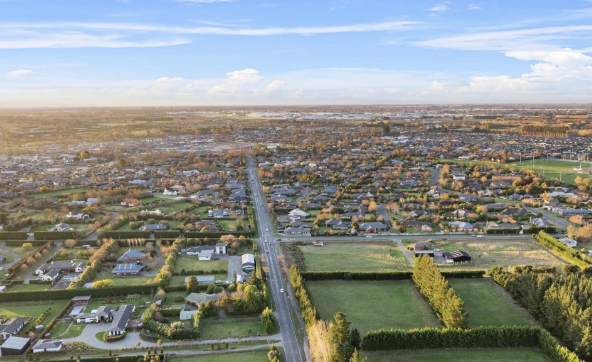
With interest rates more settled than they were during the sharp rises of recent years, many buyers are rechecking options they had put on hold. That does not remove affordability pressure, but it does mean Christchurch buyers can still compare city townhouses with newer standalone homes in fringe areas like Wigram and Prebbleton instead of feeling forced into one narrow path.
First-home-friendly homes are the ones that stay easy to own after settlement day.
A first-buyer-friendly home should be simple to heat, simple to maintain, and flexible enough to handle the next few years of life. In practice, that usually means looking for:
- low ongoing maintenance, so your weekends and cash are not swallowed by repairs
- a layout that works for how you live now, whether that means a flatmate, a work-from-home nook, or a second toilet
- a location that keeps commuting and daily errands manageable
- build quality that supports lower power bills and fewer surprises
New builds usually have a head start here. The Ministry of Business, Innovation and Employment’s H1 Energy Efficiency requirements set thermal performance standards for new homes, and Stats NZ’s Housing in Aotearoa: 2025 says Canterbury has the highest share of relatively new housing in New Zealand, with 46.3% of current housing built from 2000 onwards. For first-home buyers, that matters because newer homes are more likely to deliver better insulation, glazing, and overall comfort without a long upgrade list on day one.
That does not mean every older home is a bad buy. It means a cheap price alone is not enough. If the home is hard to heat, awkward to live in, or likely to need work quickly, it may be less first-buyer-friendly than a slightly dearer new build that is easier to own.
Takeaway: For first-home buyers, the most affordable home on paper is not always the easiest home to own once heating, repairs, and layout compromises show up.
Townhouses, standalone new builds, and house and land packages each solve a different first-home problem.
The quickest way to compare the three main paths is side by side:
| Home type | Price pressure | Maintenance | Flexibility | Location trade-off |
|---|---|---|---|---|
| Townhouse | Usually the lowest entry point of the three | Usually the simplest to maintain | Best for singles, couples, or buyers happy with compact living | Often closer to shops, schools, and transport |
| Standalone new build | Higher upfront cost | Still low-maintenance, but with more house and section to manage | Better for flatmates, children, pets, and working from home | Often found in fringe suburbs with more space |
| House and land package | Varies by section size and inclusions | Low once completed, but watch setup costs | Good middle ground if you want standalone living without full custom design | Common in growth areas where land is still available |
Takeaway: Townhouses usually ease deposit pressure, standalone new builds usually offer more long-term flexibility, and house and land packages depend most on how complete the package really is.
Townhouses
If your biggest goals are lower maintenance and a lower entry price, a townhouse is often the strongest starting point. You usually give up section size, but you gain a more manageable purchase price, less exterior upkeep, and better access to shops, cafes, schools, and transport.
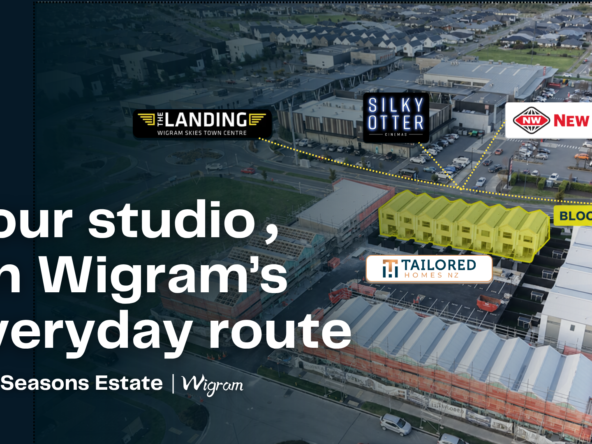
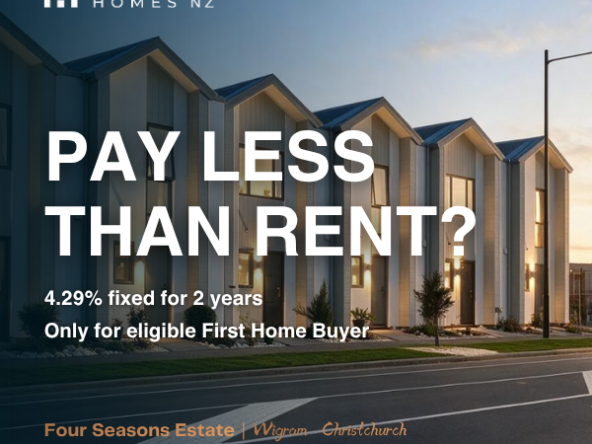
Our team sees this clearly in Four Seasons Estate Wigram at 41 Deal Street. These 36 freehold townhouses start from $617,000 (as of 2026) and were designed for owner-occupiers as well as investors. We regularly speak with first-home buyers there who want a second bedroom for a flatmate or home office without taking on the upkeep of an older standalone house.
Townhouses usually suit buyers who want to stay close to amenities, keep weekend maintenance low, and hit a smaller deposit target. The main checks are simple: look carefully at storage, parking, sun, outdoor space, and whether the title is freehold or structured another way.
Townhouse takeaway: If entry price and low upkeep matter most, a well-designed townhouse is often the cleanest first-home starting point.
Standalone new builds
If you want more privacy, more storage, and more future family flexibility, a standalone new build is usually the better fit. You will normally pay more up front, but you may get a better long-term match for flatmates, children, pets, or working from home.
A good example is our Prebbleton work. Across our current developments there, 3 and 4-bedroom standalone homes start from $849,000 (as of 2026). Prebbleton appeals to buyers who want more house, more land, and a quieter village feel while staying around 15 minutes from Christchurch CBD, and we often see buyers choose this path when they know a garage, third bedroom, or family-friendly layout will matter sooner rather than later.
Standalone new builds usually suit buyers who expect to stay put longer, want a garage or more separation between rooms, and can stretch now to avoid moving again too soon.
Standalone takeaway: If you can stretch further now, a standalone new build often buys more privacy and more room for the next stage of life.
House and land packages
A house and land package sits between buying a completed home and building fully custom. It can be a smart first-home option when you want standalone living but still want clarity around price, spec, and process.
The key question is inclusion level. Some packages are very complete. Others need extra spend on landscaping, fencing, window furnishings, or appliances. Compare like with like. A higher list price can still be better value if it includes more of the move-in essentials and saves you from immediate extra spending.
House and land packages usually suit buyers who want a standalone house without designing every detail from scratch, care about section orientation and future resale appeal, and are comfortable with a build timeline instead of immediate move-in.
House and land takeaway: For first-home buyers, the smartest package is the one with the clearest inclusions and the fewest move-in extras.
Maintenance, layout, and location often matter more to long-term value than a small difference in asking price.
Maintenance
An older home can look cheaper until you price the real work: heating upgrades, glazing, roofing, repainting, drainage, or post-earthquake wear and tear. New builds reduce that risk. At Tailored Homes, fixed-price contracts matter for first-home buyers because budget certainty is part of value too, and every home comes with a 10-year Master Build Guarantee.
Layout
Choose for the next stage of life, not only this year. A two-bedroom townhouse may be ideal if you value low maintenance and a simpler budget. A three-bedroom standalone home may be the smarter choice if one room needs to become a nursery, office, or flatmate room. Small details matter more than first-home buyers sometimes expect: storage, second bathrooms, sun, laundry space, and whether the living area actually works for how you spend evenings and weekends.
Location
In Christchurch, location is more than postcode. It is also flood exposure, school access, traffic, and daily convenience. The Christchurch City Council LIM can reveal flooding, consents, and other property information, while the Council’s floor level guidance explains how new homes are designed for flood resilience, including minimum floor levels and 400mm freeboard in Christchurch. That is one reason many first-home buyers feel more confident buying in modern subdivisions or recent developments rather than trying to decode an older site’s risk profile from scratch.
Section takeaway: A slightly dearer home can still be better value if it cuts maintenance risk, suits your daily routine, and delays the need for your next move.
Deposit size matters, but affordability is really about the full monthly picture.
Before you start comparing homes seriously, talk to a lender about pre-approval. Our bank pre-approval guide for new builds walks through what banks ask for and how to prepare your file.
Start with simple maths. A 5% deposit on a $650,000 home is $32,500. A 10% deposit is $65,000. A 20% deposit is $130,000. That is why home type changes the conversation so much: on a $617,000 Wigram townhouse, even a 10% deposit looks very different from a 10% deposit on an $849,000 standalone home in Prebbleton.
The lending rules also make new builds worth checking first. The Reserve Bank of New Zealand’s deposit rules, formally called loan-to-value ratio restrictions, do not apply to construction loans and also exempt certain newly built homes bought from a developer within six months of completion. That does not mean approval is automatic, but it is one reason first-home buyers often look at new builds before older housing stock. For a plain-English breakdown, read our LVR new build exemption guide.
For many buyers, KiwiSaver closes the gap between almost there and ready now. Inland Revenue says eligible first-home buyers can usually withdraw KiwiSaver after at least three years of membership, while leaving $1,000 in the account. If you want the local version of that process, start with our guide to KiwiSaver for first home.
A smart affordability check should include:
- the deposit you can raise without emptying every savings account
- repayments at a level that still leaves breathing room
- rates, insurance, power, and travel costs
- how much maintenance the property will need in the first five years
If you want a broader planning view, see our guides to homes for first home buyers and affordable homes Christchurch.
Affordability takeaway: The right first home is the one that keeps both the deposit and the monthly running costs realistic.
The best place to start is with two or three suburbs or fringe areas that match your preferred home type.
For Christchurch buyers, the shortlist is usually less random than it seems.
Wigram
Wigram is strong for townhouse buyers who want convenience and lower maintenance. Four Seasons Estate Wigram shows why: freehold new townhouses, modern layouts, and an accessible starting price for a popular southwest location.
Prebbleton
Prebbleton is popular with buyers who want a standalone new build, more land, and a family-friendly feel without losing access to the city. Our current homes there show how this area can suit buyers who are willing to pay more for space and future flexibility.
Halswell and southwest Christchurch
Halswell remains a common shortlist for buyers who want established amenities, schools, parks, and a straightforward link back into Christchurch. Budgets can still stretch further here than in some inner suburbs, but fit matters more than suburb label alone.
Lincoln and nearby fringe growth areas
Lincoln and other Selwyn locations are often part of the same search, especially for buyers comparing townhouse convenience against house and land value. The trade-off is usually simple: more space and newer neighbourhoods in exchange for a longer commute.
The fastest way to begin is to pick your best-fit home type first, set a comfort budget rather than just a maximum bank number, and then shortlist two areas that match both. After that, compare inclusions, maintenance risk, and daily travel time before you compare cosmetic finishes.
Area takeaway: Start with the home type that fits best, then shortlist suburbs that make that option practical day to day.
FAQ
What is the best type of first home to buy in Christchurch?
The best type depends on your budget and life stage. Townhouses usually suit buyers who want a lower-maintenance and lower-entry option, while standalone new builds and house and land packages suit buyers who want more space and future flexibility.
Are townhouses good first homes?
Yes, especially if your priorities are a lower purchase price, lower maintenance, and a convenient location. Just make sure you check storage, parking, outdoor space, title structure, and sun.
Can I use KiwiSaver for my first home deposit?
Often yes. Inland Revenue says eligible first-home buyers can usually withdraw KiwiSaver after at least three years, but you must leave $1,000 in the account and meet the provider’s process requirements.
Which Christchurch areas do first-home buyers often compare?
Wigram is popular for new townhouses, while Prebbleton, Halswell, Lincoln, and other fringe growth areas are commonly compared by buyers who want standalone homes and more space.
Talk to Tailored Homes about first-home options that balance price, quality, and future flexibility. If you want to see what is available now, browse our new builds for sale and let our team help you narrow the search by fit, not just price.