A freehold townhouse is usually the cleanest townhouse title you can buy in New Zealand, but the label only matters if the legal title backs it up. It affects what you own, what you can alter, how the property is financed, and how easy it is to sell later.
In plain English, a true freehold townhouse usually sits on its own fee simple title. That is different from a cross-lease and different again from a unit title with body corporate rules. For Christchurch buyers, understanding that distinction early can save weeks of due diligence and expensive surprises. Takeaway: the title type is worth confirming before you compare price or plan.
Freehold vs cross-lease vs unit title: what each means in plain English
The simplest way to think about it is this: freehold means you own the land, cross-lease means you share the land title and lease back your home area, and unit title means you own a defined unit while sharing common property.
Freehold or fee simple
Freehold, also called fee simple, is the cleanest and most familiar form of ownership for most buyers. Settled.govt.nz describes it as New Zealand’s most common ownership type, and Land Information New Zealand (LINZ) explains that a record of title shows the ownership of land plus the rights and restrictions affecting it. In practice, a freehold townhouse usually means you own the land under the home and the building itself.
That said, freehold does not mean totally unrestricted. A fee simple title can still be affected by easements, covenants, consent notices, or service rights. You may own the lot outright, but the title can still impose obligations that matter day to day.
Cross-lease
Cross-lease is different. You own a share of the freehold title with the other owners and also hold a leasehold interest in the particular dwelling area you occupy. As Settled notes, cross-lease titles often come with a flats plan showing the footprint of the building and any exclusive-use areas. That is why exterior alterations, decks, fences, extensions, or changes to shared areas can need agreement from the other owners. Cross-lease can work well, but it is not the same as owning your own lot outright.
Unit title
Unit title is common in apartments and townhouse complexes. You own a defined unit and share common property such as driveways, landscaped areas, or other building elements. Under Unit Titles Services guidance, when you buy a unit title you automatically become a member of the body corporate and pay levies toward shared costs. The Real Estate Authority also notes that a unit title record of title will usually say stratum in freehold or stratum in leasehold.
That last phrase causes a lot of confusion. If a title says stratum in freehold, it still sits under the unit title system. It is not the same thing as a fee simple freehold townhouse. Takeaway: the words on the title tell you more than the marketing headline.
Why freehold matters for resale and lender comfort
Freehold matters because simpler titles usually create less friction at resale and in credit assessment.
On resale, a fee simple townhouse is often easier for the next buyer to understand. There is usually no flats plan to reconcile, no body corporate minutes to review, no levy history to analyse, and fewer shared governance questions. That does not guarantee a higher sale price, but it often means a broader buyer pool and fewer legal objections once the deal reaches a solicitor’s desk.
Lenders think similarly. Banks do not lend on title alone, but a clean fee simple townhouse is generally simpler security than a property with unresolved cross-lease alterations, heavy shared obligations, or a complex body corporate history. The Reserve Bank of New Zealand (RBNZ) sets the system rules around low-deposit lending, and its loan-to-value ratio framework also includes exemptions for construction loans and certain newly built homes bought from developers within six months of completion. In other words, freehold and new build are separate positives: one affects title simplicity, the other can affect finance settings.
A simple example helps. A 5% deposit on a $650,000 home is $32,500. Whether a bank will accept that depends on the borrower, the bank, and the property, not just the word freehold in the ad. But when title is straightforward, there is one less problem for everyone to solve. Takeaway: a clean title usually reduces friction, even when it does not change lending rules on its own.
How to identify freehold in a listing or LIM
Do not rely on headline copy alone. Confirm the title in the record of title, then use the LIM to understand the council-held history and risks around that property.
Start with the listing language. Words like freehold, fee simple, or own title are encouraging, while words like cross-lease, unit title, body corporate, or stratum in freehold tell you the ownership structure is different. Marketing copy is only a clue, not proof.
Next, order the current record of title from LINZ. LINZ says the top of the title shows the title type, and the middle section shows the estate, such as fee simple or leasehold. For a true freehold townhouse, you are looking for title wording that aligns with Freehold and an estate of Fee Simple. Read the interests section carefully too, because that is where easements, drainage rights, land covenants, fencing covenants, and other restrictions are recorded. LINZ says a current record of title can be ordered for $8 (as of 2026).
Then use the Christchurch City Council LIM the right way. The Council says a LIM includes council-held information such as building consents, services, rates, flooding information, and earthquake-related entries on file. That is useful context, but it does not prove ownership structure. The title proves the tenure. The LIM helps you understand the property around that tenure. Takeaway: the title proves tenure; the LIM adds context.
If you want the wider due-diligence checklist, start with our Christchurch townhouse buying guide. Then have your lawyer review the title, the survey or unit plan, and any instrument numbers before you go unconditional.
Freehold townhouse availability in NZ: supply trends
Freehold townhouses are more available than they were a decade ago, but supply is still uneven because higher-density sites often rely on shared access, shared services, or unit title structures.
Nationally, townhouse-style living has become more common. In Housing in Aotearoa 2025, Stats NZ reported that separate one-storey houses remain the most common dwelling type, but multi-storey houses and joined dwellings are becoming more common, and joined private dwellings rose 37.6% between 2013 and 2023 (cited as of 2026). That is not a pure townhouse count, but it is a strong signal that medium-density housing has expanded.
The catch is that more townhouse stock does not automatically mean more fee simple stock. On denser urban sites, developers often need shared accessways, common infrastructure, or vertically stacked layouts, which can push a project toward unit title or toward fee simple lots with multiple easements. That is why buyers should think of freehold townhouse availability as location-specific, not universal.
In Christchurch, we continue to see strong demand where buyers want low-maintenance living without apartment-style complexity. Wigram, Halswell, and the southwest corridor remain active new-build markets, especially for two- and three-bedroom homes that suit first-home buyers, downsizers, and investors. Supply exists, but the cleanest freehold stock is usually absorbed quickly because the title story is easier to understand. Takeaway: ask whether the site is freehold, not just whether it is a townhouse.
Common pitfalls: easements, body corporate confusion, and shared driveways
A freehold townhouse can still come with legal strings attached, so the word freehold should start your due diligence, not end it.
Easements and shared driveways
LINZ notes that rights and restrictions such as easements are registered against title. On many townhouse sites, the practical issue is access: who can use the driveway, who maintains it, where services run, and whether parking or turning is restricted. The Property Law Act 2007 includes implied covenants for vehicular rights of way and rights of access lots in sections 297 and 298, but those default rules can be varied by the registered instrument. Read the actual easement document, not just the marketing brochure.
Covenants and consent notices
A freehold title can still control what you build, where you park, whether you can add another dwelling, what materials or fencing you use, or how stormwater and services are handled. Section 303 of the Property Law Act 2007 gives legal effect to certain covenants that run with land. So yes, a townhouse can be freehold and still come with meaningful limitations.
Body corporate confusion on so-called freehold townhouses
This is one of the biggest buyer traps. If a record of title says stratum in freehold, you are looking at unit title even though the word freehold appears. A true fee simple townhouse normally does not sit inside a Unit Titles Act body corporate, but buyers can still encounter residents’ associations, service companies, shared insurance arrangements, or maintenance-sharing formulas that feel similar. Ask for every levy, fee, or shared-cost rule in writing before you go unconditional.
Earthquake and insurance due diligence
In Christchurch, title is only one part of the picture. Check previous earthquake or natural hazard claims, current insurer acceptance, engineer reports, and code compliance history. The Natural Hazards Commission Toka Tu Ake says homes with valid fire-inclusive home insurance generally have access to natural hazards cover, but the structure of that insurance differs between fee simple ownership and unit-title complexes. For newer townhouses, compliance with the New Zealand Building Code and Christchurch City Council consent process matters, but so does the paper trail around any past damage or repairs. Takeaway: freehold is the starting point, not the finish line.
Tailored Homes’ freehold townhouse offerings
Our approach is simple: explain the title clearly before a buyer has to decode it in a solicitor’s report. If you want to compare Tailored Homes’ current stock, start with our freehold townhouse options. Tailored Homes has been developing and building new homes across Canterbury since 2010, with 100+ homes delivered (as of 2026), and we know that title clarity matters almost as much as floor plan and finish.
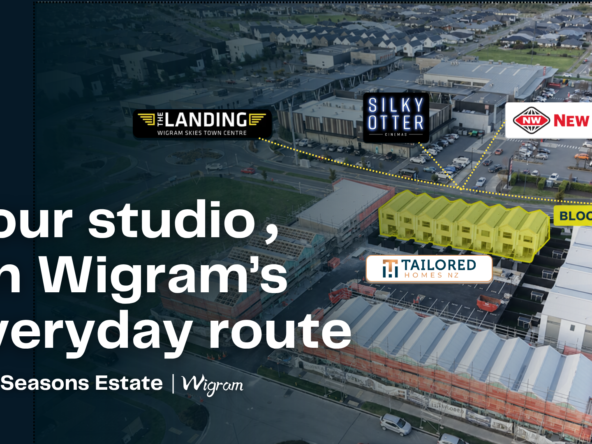
At Four Seasons Estate Wigram, 41 Deal Street, we are delivering 36 freehold townhouses with two- and three-bedroom layouts and premium finishes for both owner-occupiers and investors. A first-home buyer may care most about the fixed-price contract and the simple title structure, while a downsizer may be focused on low-maintenance living without body corporate complexity. Pricing starts from $617,000, rental appraisals reach up to $710 a week for selected three-bedroom homes and $600 a week for two-bedroom homes, and completion is targeted for Q4 2026 (all as of 2026). The homes are offered on a fixed-price contract, which is exactly the kind of certainty many townhouse buyers are looking for. You can view the current release of Wigram new townhouses here.
For buyers who want low-maintenance living without the usual title confusion, that combination matters. A good townhouse is not just about kitchen finishes or rental appeal. It is also about being crystal clear on what sits on your title and what does not. Takeaway: clarity on title, price, and ownership structure is what turns a listing into a buyable option.
FAQ
These are the five freehold townhouse questions we hear most often from Christchurch buyers.
Can I sell a freehold townhouse without body corp consent?
Usually, yes. A true fee simple townhouse does not have a Unit Titles Act body corporate approval step. Your solicitor still needs to check any mortgage, covenant, easement, or shared arrangement affecting settlement. If the title says stratum in freehold, it is unit title rather than simple freehold.
Are freehold townhouses always more expensive?
No. Freehold can attract a premium on a like-for-like comparison because the land ownership is clearer and there are fewer shared obligations, but location, parking, layout, school zones, finish, and total holding costs still drive price. That is why title type should be assessed alongside the whole deal, not in isolation.
Do banks prefer freehold?
Often, yes in practice, because fee simple security is easier to assess. But banks do not lend on title alone. Deposit, income, debt-to-income position, valuation, and whether the property is a new build all matter. Reserve Bank rules and each lender’s own credit policy still apply.
What about earthquake and insurance on a freehold townhouse?
In Christchurch, title type does not remove the need to review claim history, insurer acceptance, code compliance documents, and any engineering reports. With qualifying home insurance, natural hazards cover usually sits alongside private insurance. Freehold owners usually insure individually, while unit title complexes often insure buildings through the body corporate.
Can a freehold title have covenants?
Yes. Freehold does not mean unrestricted. A record of title can still show easements, land covenants, fencing covenants, consent notices, or service rights, so your lawyer should review the interests section and any referenced instruments before you go unconditional.
If you want a current Christchurch shortlist with the title structure explained upfront, see Tailored Homes’ freehold townhouse options.