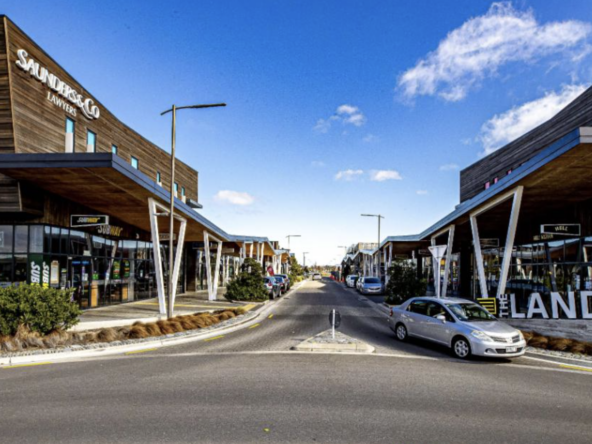
This Christchurch property capital growth forecast for 2026-2030 is built from Cotality NZ (formerly CoreLogic), Real Estate Institute of New Zealand (REINZ), Stats NZ, Reserve Bank of New Zealand (RBNZ), Ministry of Business, Innovation and Employment (MBIE), Christchurch City Council, and Greater Christchurch Partnership data, all referenced as of 2026.
At Tailored Homes, we have been building in Canterbury since 2010 and have delivered more than 100 homes across Christchurch and its growth corridor, so we watch this market as both builders and on-the-ground participants. Our recent Wigram townhouse pipeline and Prebbleton standalone builds are practical examples of the demand mix we are seeing. Our base case is a selective, low-to-mid single-digit growth cycle rather than a 2021-style surge, with Selwyn and the southwest corridor likely to do better than the broader market. This is a research summary only, not financial advice.
Christchurch’s growth story 2014-2025
Christchurch enters 2026 from a flatter, healthier base than the last peak, which is why the next cycle looks more like a grind upward than a boom.
The post-quake decade was unusual because rebuild activity, land release, and infrastructure renewal kept Christchurch more supply-responsive than Auckland or Wellington. That meant the city benefited from strong employment and population support without becoming quite as stretched on price. Then came the 2021-22 national housing peak. REINZ described Canterbury as reaching record highs in early 2022, and by July 2022 Canterbury’s median price was still $678,000. But the correction followed quickly: REINZ put Canterbury’s median at $655,000 in December 2022.
What matters for a 2026-2030 forecast is the reset. By December 2025, REINZ reported Canterbury’s median sale price back at a record $725,000, while Canterbury’s House Price Index was up 2.6% year-on-year. Cotality NZ’s December 2025 Home Value Index put Christchurch’s median property value at $683,360. REINZ’s February 2026 update also noted Canterbury recorded its highest February sales count since 2021, which fits the idea of a market that has stabilised rather than overheated.
In other words, Christchurch is not starting this forecast period from a euphoric top. It is starting from a market that already absorbed a correction, held up better than many larger centres, and is now rebuilding momentum. For the shorter-cycle backdrop, see our Christchurch market trends 2026 guide.
What’s driving 2026-2030 growth
Population growth in Selwyn and Waimakariri is the biggest structural reason Christchurch should keep compounding between 2026 and 2030.
Stats NZ’s 2023-base medium projections point to sustained growth around Greater Christchurch, not just within Christchurch City itself. Christchurch City is projected to rise from 407,700 people in 2023 to 445,700 by 2033. Waimakariri is projected to move from 68,000 to 76,600 over the same period. For Selwyn, summing Stats NZ’s medium age-group projections gives a rise from about 82,000 people in 2023 to about 108,000 by 2033. That is why the Rolleston-Lincoln-Prebbleton arc matters so much: it sits in the path of the strongest household growth.
Infrastructure supports that story. New Zealand Transport Agency Waka Kotahi lists the Christchurch Northern Corridor as completed, improving freight and commuter efficiency between north Christchurch and Waimakariri. The Greater Christchurch Spatial Plan, adopted in early 2024, gives the sub-region a long-range blueprint for targeted intensification around centres and corridors, while still sequencing greenfield growth. The plan says Greater Christchurch has grown to around half a million people and could reach roughly 700,000 by 2050.
Affordability is the other major driver. Compared with Auckland’s much higher price base and Wellington’s weaker recent value cycle, Christchurch still looks attainable for trade-up buyers, mobile professionals, and investors who want a major-city market without seven-figure entry pricing. We do not assume a flood of movers from Auckland, but relative affordability keeps Christchurch high on the shortlist.
Demand-side drivers
Demand in 2026 is being carried by migration, family formation, and an ageing population that is reshaping what buyers want.
Stats NZ’s medium projections for Canterbury imply continued net migration gains rather than stagnation. For the Canterbury region, the projected net migration gain is 29,300 people for 2023-2028 and 32,100 for 2028-2033. That does not mean every year will be smooth, but it does support the idea that Canterbury should keep adding households even if national migration cools from the 2023 spike.
Demographics matter just as much as migration. Christchurch City’s 65+ population is projected to rise from 65,400 in 2023 to 86,400 by 2033, while Waimakariri rises from 14,500 to 21,800 and Selwyn from about 10,400 to about 20,100. That supports downsizer demand for lower-maintenance homes, townhouses, and single-level designs in established, amenity-rich suburbs. At the same time, the 15-39 cohorts remain large across Christchurch and Selwyn, which keeps first-home and family-home demand broad.
Buyers also need to work from current policy settings, not outdated ones. In 2026, the practical first-home supports are narrower than many people assume:
- Kāinga Ora’s First Home Loan still allows eligible buyers to buy with a 5% deposit, so a 5% deposit on a $650,000 home is $32,500.
- KiwiSaver first-home withdrawals remain available for eligible buyers.
- Qualifying new builds still sit outside the standard loan-to-value ratio speed limits at most banks.
- The First Home Grant was removed on 22 May 2024, so any buyer still budgeting for it is using an outdated assumption.
Supply-side reality
Christchurch has a positive growth outlook, but supply is active enough to cap runaway price spikes.
This is the key difference between Christchurch and the country’s more constrained markets. Supply is not frozen. Infometrics data built on Stats NZ consent figures showed Selwyn’s annual new dwelling consents were up 15.5% in the year to June 2025, compared with a 1.0% increase nationally and a 7.9% decline in Christchurch City. That does not kill capital growth, but it does mean suburb selection matters more than broad market timing.
The Greater Christchurch Spatial Plan reinforces that point. It explicitly provides for targeted intensification around centres and public transport corridors, while keeping greenfield land part of the long-run housing answer. Christchurch City Council’s built environment reporting also shows how active this has already become inside the city: multi-unit dwellings made up 66% of housing gain in both 2022 and 2023, while greenfield areas such as Halswell and Prestons have recorded the highest residential consent volumes in the city.
Construction capacity should also be less constrained than it was at the peak of the last cycle. MBIE’s National Construction Pipeline Report 2025 forecasts residential activity recovering from 2026, with new dwelling consents nationally rising from 33,500 in 2025 to 40,000 by 2030, led increasingly by multi-unit projects. That suggests better delivery capacity, but it also means buyers should not expect scarcity alone to do all the work.
Suburb-level outlook
Capital growth is unlikely to be even across Christchurch, and the strongest performance should stay concentrated in the Selwyn growth corridor and the southwest edge of the city.
| Area | Growth bias | 2026-2030 outlook |
|---|---|---|
| Rolleston | High | Best placed for family-led volume growth because of scale, schools, employment catchments, and ongoing population expansion. The main watch-out is oversupply of similar stock. |
| Lincoln | High | More scarcity than Rolleston, strong amenity, and a tighter town-centre feel. Likely to attract owner-occupiers who support steadier capital growth. |
| Prebbleton | High | Well positioned for trade-up families wanting proximity to the city without losing suburban space. In our own market, 3 and 4-bedroom standalone stock remains one of the most durable formats here. |
| Halswell | Moderate-high | One of the strongest Christchurch City Council-side suburbs because it benefits from southwest corridor demand, schools, and continued family appeal. |
| Wigram | Moderate-high total return | Probably the cleanest investor suburb in the city-fringe southwest. New-build stock is plentiful enough to temper extreme capital gains, but rental demand is deep and resale liquidity is solid. |
| Riccarton | Moderate, yield-first | University and hospital proximity help rents and liquidity, but denser stock and more investor competition can mute upside relative to Selwyn-family suburbs. |
| Cashmere | Scarcity-driven | Lower yield, stronger owner-occupier premium, and better long-term capital preservation through land scarcity and school-zone appeal. |
Risks to the forecast
The biggest risk is not that Christchurch has no growth case; it is that buyers overpay for the wrong product while ignoring macro and policy risk.
- The Reserve Bank of New Zealand held the Official Cash Rate at 2.25% on 8 April 2026. Its February 2026 Monetary Policy Statement said house price growth should gradually increase over 2026 and then run around household income growth over the medium term, but inflation and global shocks could still keep rates higher for longer.
- Construction cost inflation has cooled from the worst of the post-pandemic spike, but it has not vanished. Fixed-price discipline still matters for anyone building for resale or long-term hold.
- Climate and insurance repricing remains a real medium-term variable, especially for lower-lying or flood-sensitive locations. That will not hit every suburb equally.
- The current coalition government has already moved quickly on housing settings, including bright-line, interest deductibility, and granny-flat reform. Policy speed cuts both ways.
Investor implications
For investors, Christchurch is increasingly a split market: stronger capital growth is likely to concentrate in Selwyn and family-led edge suburbs, while rental yield tends to hold up better in inner Christchurch and purpose-built new builds.
If the objective is pure capital growth, we think the highest-conviction story still sits in the Rolleston-Lincoln-Prebbleton corridor, plus selected family suburbs on the city side such as Halswell. If the objective is balanced total return, Wigram stands out. In our recent Wigram townhouse pipeline, new-build townhouses have been appraised around 4.8%-5.4% gross yields on roughly $659,000-$725,000 purchase prices, with rents around $680-$710 per week as of 2026. That is why we continue to see the southwest corridor as more than just a first-home market.
This is also where the new-build versus existing investment property decision becomes practical rather than theoretical. Existing homes in land-scarce suburbs can still outperform on raw land value, but well-priced new builds often win on finance flexibility, lower maintenance, and tenant-ready compliance.
At a settings level, the 2026 model is materially different from the 2022-2024 one:
- The bright-line test is 2 years, effective 1 July 2024, not 10 years.
- Mortgage interest deductibility on residential rentals was fully restored from 1 April 2025, making FY26 the first full year of full deductibility.
- Residential building depreciation remains 0%, so the building itself is not depreciable.
- Chattels such as carpets, heat pumps, appliances, hot-water systems, blinds, and curtains can still be depreciated at standard rates.
- Ring-fencing of rental losses remains active.
- Qualifying new builds still sit outside the standard loan-to-value ratio speed limits at most banks.
- GST is generally not claimable on standard residential rentals.
Those settings improve underwriting, but they do not remove location risk. Better tax treatment cannot rescue a weak suburb or an overbuilt product type.
Methodology note and disclaimer
This forecast is a research-based synthesis from Cotality NZ, REINZ, Stats NZ, RBNZ, MBIE, Christchurch City Council, and Greater Christchurch Partnership data. It is a research summary only, not a promise of returns and not personal financial, legal, or tax advice.
The forecast ranges and suburb calls in this article are Tailored Homes’ interpretation of current market evidence rather than any government agency’s official forecast. The main sources reviewed were:
- Cotality NZ Home Value Index, December 2025.
- REINZ market updates for December 2025 and February 2026.
- Stats NZ 2023-base subnational population projections and 2023-base population estimates.
- Reserve Bank of New Zealand Monetary Policy Statement February 2026 and Financial Stability Report May 2026.
- MBIE National Construction Pipeline Report 2025 and building-consent monitoring data.
- Greater Christchurch Spatial Plan adopted in February-March 2024.
- Christchurch City Council built environment reporting.
FAQ
The short answers: Christchurch can still outperform, Selwyn is not too late, and better tax settings do not automatically create capital growth.
Will Christchurch outpace Auckland again?
It can in percentage terms. Christchurch has a lower starting price base, better family-home affordability, and stronger greenfield population growth around it. But because supply is more active here, the outperformance is more likely to be steady than explosive.
Is Selwyn already too late?
No, but it is no longer enough to simply buy anything in Selwyn. The suburbs with the best chance of outperforming are those with transport convenience, school appeal, and a product mix that matches family demand. Rolleston, Lincoln, and Prebbleton still fit that test better than the average new subdivision.
What’s the 2030 median forecast?
On a base-case nominal path, a Christchurch City Cotality-style median value around $790,000-$860,000 by 2030 looks plausible from $683,360 in December 2025. On a REINZ-style Canterbury median sale-price basis, roughly $840,000-$910,000 from $725,000 is a reasonable band. That is our inference, not a guarantee. For the current-year breakdown by suburb, see our Christchurch median house price 2026 forecast.
Does the shorter bright-line test support flipping?
Not on its own. A 2-year bright-line is shorter than the old 10-year rule, but gains inside the bright-line period are still taxable where the rules apply, and build risk, holding costs, resale risk, and selling fees can easily wipe out a thin margin.
Will new builds outperform existing homes?
Not everywhere. Scarce existing homes in mature suburbs can still win on land value, while new builds often win on finance, compliance, lower maintenance, and rentability. In Christchurch, we expect the next cycle to reward both: scarce owner-occupier suburbs for capital protection, and well-located new builds for better total-return maths.
If you want to position a build around the strongest 2026-2030 corridors rather than chase yesterday’s cycle, talk to us through the Tailored Homes custom home builder hub. We can help you compare land, suburb fit, and build strategy across Wigram, Halswell, Prebbleton, and the wider Christchurch-Selwyn market.