If you are serious about building a custom home in Canterbury, the hard part is rarely the vision. It is understanding the sequence. Buyers hear design and build used everywhere, but many are still unclear about what happens in week 2, week 8, or month 10.
At Tailored Homes, we have been building across Christchurch and Canterbury since 2010, with 16 years of experience and more than 100 homes delivered. This guide explains the design and build process nz buyers can expect in 2026, using a Christchurch-area timeline and linking back to MBIE, Master Builders, Christchurch City Council, and Selwyn District Council requirements where they matter.
What ‘design and build’ actually means in NZ
In New Zealand, design and build usually means one builder-led team takes responsibility for design, pricing, consent coordination, and construction, instead of you managing separate consultants and a separate builder.
For buyers, it behaves as a single-responsibility model: one team owns the path from brief to build. That matters because most residential problems do not start with the slab; they start with misalignment. MBIE notes that common design disputes include plans coming in over budget, designs the client no longer likes, and drawings that need rework for consent. A joined-up model reduces those handoffs and keeps the design tied to buildability from day one.
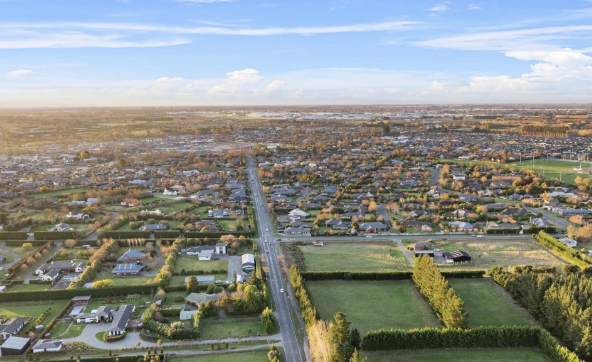
That is why the model is so common across Christchurch’s growth areas. In places like Prebbleton, Lincoln, Rolleston, and Christchurch City, section shape, sun, covenants, drainage, and budget all interact early. If you are still deciding between a fully bespoke home and a packaged option, our Christchurch new-build homes hub is a practical place to compare pathways.
Takeaway: design and build works best when the same team is accountable for both the plan and the price.
Stage 1 – Discovery (Week 1-3)
Weeks 1 to 3 are about establishing whether the site, the budget, and the brief actually fit each other before detailed design begins.
The first meeting should cover four things clearly: how you live, what you want to spend, whether you already own the section, and what deadlines matter. Lifestyle questions should get specific. Do you work from home, need a scullery, want a second living room, need aging-in-place planning, or expect the home to flex for teenagers later? If you already have land, bring the title, geotech information, covenant pack, site photos, and anything you know about services or floor-level requirements. If you do not have land yet, your builder should help you narrow the search by suburb, section size, orientation, and likely build type, including options like our new homes available in Lincoln.
This is also where the money conversation needs precision. A 5% home-loan deposit on a $650,000 purchase is $32,500, but that is not the same thing as a design deposit or a build contract deposit. Some builders use an upfront design agreement to cover concept work, site review, and early pricing. The key is not whether a deposit exists, but whether it is documented, transparent, and clearly tied to work you can see.
Takeaway: if the brief, the budget, and the section do not align in week 1, later drawings usually just make the mismatch more expensive.
Stage 2 – Concept Design (Week 3-6)
Weeks 3 to 6 convert your brief into one or two concept plans and a rough cost range so you can test ideas cheaply before full documentation starts.
This is the stage for layout, not fine-grain decoration. You are deciding bedroom count, living zones, garage placement, indoor-outdoor flow, storage, solar orientation, and how the house sits on the site. A good concept also solves the boring but expensive issues early: driveway position, setbacks, privacy, future-proofing, and whether a single-level or two-level solution makes more sense on the section.
By the end of concept design, you should have a plan you can believe in and an indicative price that lets you make a real go-or-no-go decision. If the concept is too large, too complex, or misaligned with the section, this is the cheapest moment to reshape it.
Takeaway: concept design is where you protect budget by testing layout decisions before they harden into expensive documentation.
Stage 3 – Detailed Design and Pricing (Week 6-12)
Weeks 6 to 12 are where the project becomes contract-ready through full plans, specifications, engineering input, and firm pricing.
Now the house gets specific: cladding systems, insulation approach, joinery, kitchen layout, heating, lighting, bathrooms, appliances, and exterior details. At the same time, the design team is checking how the home will meet the New Zealand Building Code, which MBIE describes as performance-based rather than prescriptive.
This is also the point where the paperwork has to be disciplined. MBIE’s contract guidance says residential building contracts over $30,000 must cover price, start and completion timing, who is responsible for consents, payment stages, defects, disputes, and how variations are agreed. At Tailored Homes, our preference is to get the scope settled enough to offer a fixed-price contract before construction starts, because that is where buyers get the most clarity.
Takeaway: once scope, selections, and pricing align on paper, the design, budget, and contract will finally describe the same house.
For trickier sites, early council discussions help. Christchurch City Council’s pre-application service is aimed at identifying compliance issues early and reducing RFIs, while Selwyn District Council says pre-application outcomes can feed directly into the final design.
Stage 4 – Building Consent (Week 12-20)
Weeks 12 to 20 are usually controlled by consent quality and council workflow, which is why a 20-working-day consent often takes longer in calendar time.
For a Christchurch City site, Christchurch City Council says the statutory 20-working-day clock starts when the application is received, but it pauses if the council issues a request for information. As of 20 April 2026, the council reported residential consent processing started within 12 working days, and 99.4% of March residential applications were processed within the statutory timeframe.
For a Selwyn site such as Prebbleton or Lincoln, Selwyn District Council treats vetting and acceptance as a distinct step, then starts the 20-working-day clock once the application is complete. As of February 2026, Selwyn reported an average building consent issue time of 9.2 working days, with 98.9% processed within 20 working days.
What stalls consent? In practice: incomplete drawings, missing engineering, weak drainage information, unclear product data, missing LBP paperwork, or a proposal that also needs resource consent. If a design breaches the district plan, your builder may need to resolve a separate planning path first. In Christchurch, a resource consent is separate from building consent. In Selwyn, early pre-application discussions can surface those issues before lodging. If you are submitting over summer, note that Selwyn’s statutory clock pauses between 20 December and 10 January.
Takeaway: the statutory 20 working days is a processing clock, not a guarantee of a 20-day start-to-finish approval.
Stage 5 – Construction (Month 5-13)
Month 5 to month 13 is the visible part of the process, but the best builds are still run by sequencing, inspections, and disciplined decision-making.
Construction usually moves through site prep and slab, framing, roof and weathertight shell, services, insulation and linings, then kitchen, flooring, painting, and final fit-off. Progress payments are normally linked to completed milestones rather than arbitrary dates, and MBIE requires the payment process and stages to be set out in the written contract.
Council inspections matter here. Christchurch City Council and Selwyn District Council both stress that work must be ready when inspectors arrive, because failed or delayed inspections slow the programme. As of February 2026, Selwyn was booking inspections about seven working days out. Some owner decisions still happen during construction, especially final colours, mirrors, wardrobes, landscaping scope, and site extras, but they should be scheduled, not improvised.
Takeaway: good construction programmes stay on track when inspections are booked early and owner decisions are made before they become site delays.
A typical 2026 Canterbury timeline
- Weeks 1 to 3: discovery on an owned section in Prebbleton, with budget framing and site review.
- Weeks 3 to 6: one or two concept plans, revised after pricing feedback.
- Weeks 6 to 12: detailed plans, engineering, selections, and fixed-price contract.
- Weeks 12 to 18: building consent through Selwyn, assuming no major RFI.
- Months 5 to 8: slab, frame, roof, cladding, and windows.
- Months 9 to 13: interior fitout, practical completion, final inspections, and handover.
Owner site visits are valuable, but they should be purposeful. Use them to confirm progress, ask questions, and lock in pre-agreed selections, not to redesign rooms in real time.
Stage 6 – Practical Completion and Handover (Month 12-14)
Practical completion and handover are about finishing well, closing documents properly, and making sure the home is genuinely ready to live in.
At practical completion, you do a walk-through, record remaining defects or touch-ups, and confirm what must be finished before final handover. After that comes the formal sign-off trail: warranties, maintenance information, records, and the Code Compliance Certificate process or the Selwyn equivalent. Both councils work to a 20-working-day statutory timeframe for CCC processing, although RFIs can pause that clock too.
MBIE explains that residential building work carries a 12-month defect repair period, and implied warranties continue for up to 10 years under the Building Act. As a Master Builders member, Tailored Homes also includes a Master Build 10-Year Guarantee as part of our process, which gives buyers an additional layer of protection.
Takeaway: handover is not just keys; it is the point where CCC paperwork, warranties, and defect obligations should all be complete and traceable.
Common Stress Points and How to Avoid Them
The biggest stress points are predictable, which means they are usually manageable if you name them early and handle them in writing.
- Variation creep: MBIE advises that any change to the contracted building work should be treated as a written variation with cost and time impacts agreed before work continues.
- Weather and inspection delays: Canterbury weather, subcontractor sequencing, and council bookings can all shift a programme. Build some float into your expectations instead of reading every week literally.
- Specification changes mid-build: Late changes to cladding, kitchens, flooring, or joinery often trigger re-pricing and can require consent amendments, not just a quick email.
- Finance gotchas: Keep your lender updated on timing, valuations, and progress payments. Bank valuations, build-stage drawdowns, and deadlines on finance conditions can become critical if consent or site start slips.
- Builder solvency risk: MBIE notes that if a builder goes out of business, ordinary defect protections alone may not solve the problem. That is why the guarantee, disclosure documents, and contract checks matter upfront.
Master Builders says a full Master Build 10-Year Guarantee can cover loss of deposit and non-completion if a builder goes into liquidation, but it must be properly applied for and approved before work starts. It also says the protected deposit should not exceed 10% of build cost.
The Tailored Homes Design-and-Build Workflow
Tailored Homes runs design-and-build as a guided local process: honest discovery first, buildable design second, fixed pricing before site works, then one team through consent, construction, and handover.
In practice, that means our discovery meetings start with title review, covenant checks, likely floor-level constraints, and a realistic budget range before we move clients into full documentation. On recent Canterbury work, that early step has helped settle garage placement, living orientation, and window positions before engineering and consent drawings are commissioned.
That matters because Christchurch projects are not interchangeable. A compact urban brief in Wigram is different from a family build in Prebbleton or Lincoln. Our current Canterbury work reflects that range: family homes in Hamptons Grove and Trices Road, Prebbleton; freehold townhouses at Four Seasons Estate, 41 Deal Street, Wigram; and standalone homes in Lincoln. The design response, servicing needs, and consent path change with each suburb and section.
We also think specifics beat slogans. Our recent offerings include a 176m2 four-bedroom home with a study on a 353m2 Prebbleton section, a 149.93m2 three-bedroom home on a 301m2 section at Trices Road, and a 144.55m2 three-bedroom home on 354m2 in Lincoln. On the larger Prebbleton brief, the planning challenge was balancing bedroom count, a study, storage, and outdoor space on a tighter site. On the smaller Lincoln and Trices Road homes, the focus was different: efficient circulation, sensible service zoning, and making compact three-bedroom footprints feel open rather than compromised.
If you want a builder who can shape the brief around your site and budget, see how our custom home builders in Christchurch approach bespoke projects. If you are ready to move, book a discovery call with Tailored Homes and we will map the next steps clearly before you commit to the full build.
FAQ
These are the five questions we hear most often from serious Christchurch buyers.
How long does a design-and-build take in Christchurch?
A straightforward custom home commonly takes about 12 to 14 months from first meeting to handover, with roughly 2 to 3 months for design and pricing, 1 to 2 months for consent, and 7 to 9 months for construction. Complex sites, resource consent, and late variations can extend that.
Can I change my mind once construction starts?
Yes, but every change should be treated as a formal variation. Expect possible price changes, programme shifts, and in some cases a consent amendment before the new work can proceed.
Who pays for variations?
If the change is owner-initiated, the owner usually pays. If the issue comes from defective work or a failure to deliver the contracted scope, the builder should remedy it under the contract and the Building Act protections.
How are progress payments structured?
Most residential contracts split payments into milestones such as deposit, slab, frame, enclosed shell, linings or fitout, and practical completion. The exact stages and invoicing rules should be written into the contract before work starts.
What happens if the builder goes under?
Without extra protection, insolvency can become messy quickly. A properly approved Master Build 10-Year Guarantee can provide cover for loss of deposit and non-completion within its limits, which is why you should confirm the guarantee status before the build begins.