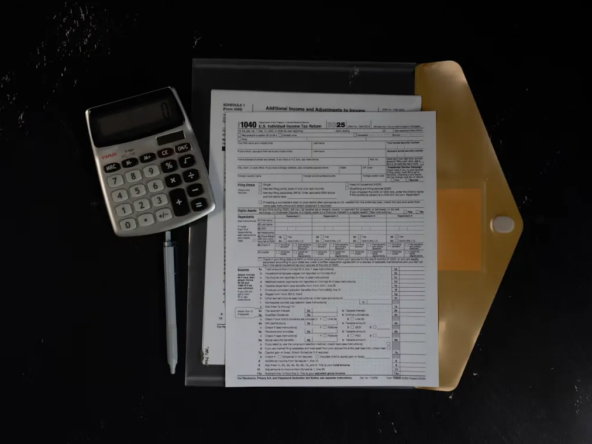
If you are searching for first home buyer grants NZ 2026, the key update is simple: there is no active nationwide cash grant open to new applicants in New Zealand as of May 2026. The live first-home support tools are the Kāinga Ora – Homes and Communities First Home Loan, the KiwiSaver first-home withdrawal, and the Reserve Bank of New Zealand (RBNZ) new-build exemption from the loan-to-value ratio (LVR) rules.
As a Canterbury builder and developer since 2010 with more than 100 homes delivered, we see Christchurch buyers lose the most time on outdated grant articles, mixed-up scheme names, and incomplete advice on new builds. This guide puts the current rules, the closed grant position, and the Christchurch numbers in one place.
The four schemes that matter in 2026
In 2026, there are three live support tools and one retired scheme that still appears in old search results.
The four names you will keep seeing are:
- First Home Loan: a low-deposit loan issued by selected lenders and underwritten by Kāinga Ora, which can reduce the required deposit to 5%.
- First Home Grant: historically the main cash grant, but now closed to new applications. Kāinga Ora’s 2024/25 annual report says new applications ceased on 22 May 2024, although some pre-existing approvals remained valid for a limited period.
- KiwiSaver first-home withdrawal: the most widely used live support option. Inland Revenue (IRD) confirms eligible members can withdraw most of their balance for a first home, provided $1,000 stays in the account.
- LVR new-build exemption: not a grant and not a separate application form, but an RBNZ lending-rule exemption that can make low-deposit new-build lending easier for banks to approve.
For Christchurch buyers, that means the real question in 2026 is usually not which grant they are missing. It is the combination of First Home Loan, KiwiSaver, and new-build lending rules that applies to the transaction. For a broader local overview, start with our Christchurch first-home buyer hub. For a lender-level breakdown of the deposit mechanics, see our 5% deposit scheme details and KiwiSaver first-home guide.
First Home Loan (5% deposit): eligibility, income caps, and the regional cap myth
The First Home Loan is the only nationwide 5% deposit programme still open in 2026, but its gatekeepers are income, servicing, and lender policy, not Christchurch house-price caps.
The point many older guides now get wrong is the regional cap question. The Ministry of Housing and Urban Development confirmed that First Home Loan house-price caps were removed from 1 June 2022. In 2026, the live caps to watch are income caps, not regional purchase-price caps.
Live rules
According to Kāinga Ora’s current First Home Loan criteria, buyers must generally meet all of the following:
- Be a New Zealand citizen, permanent resident, or resident visa holder ordinarily resident in New Zealand.
- Be a first-home buyer, or a previous homeowner in a similar financial position to a first-home buyer.
- Have before-tax income over the last 12 months of no more than $95,000 for one buyer without dependants, $150,000 for one buyer with dependants, or $150,000 combined for two or more buyers.
- Have a minimum deposit of at least 5% of the purchase price, including savings, KiwiSaver withdrawal funds, gifts, or a mix of those sources.
- Buy a home to live in as your primary residence.
- Does not own other property or land, excluding Māori land.
- Buy a property of less than 1 hectare.
- Pay a 1.2% lender’s mortgage insurance premium, plus any lender application fee.
- Meet the participating lender’s own servicing, debt, and credit criteria.
Kāinga Ora also notes that some participating lenders may allow a buyer to build a new home under First Home Loan settings, but that is lender-specific. For Christchurch buyers looking at house-and-land or staged construction, confirm that point before paying for plans, reports, or a contract deposit. If you want a lender-level breakdown, our guide to 5% deposit scheme details expands on deposit maths, premiums, and common bank questions.
KiwiSaver first-home withdrawal: minimum balance, what counts, and common mistakes
KiwiSaver is usually the most flexible live support tool in 2026 because it can fund part or all of your deposit even if you do not qualify for a First Home Loan.
Inland Revenue says you generally need at least 3 years of KiwiSaver membership before using a first-home withdrawal. It also confirms that eligible buyers can withdraw most of their balance, but $1,000 must remain in the account, and funds transferred from an Australian complying superannuation scheme cannot be withdrawn.
What counts toward the withdrawal
- Your own contributions.
- Your employer’s contributions.
- The government contribution.
- Investment returns earned inside the fund.
- Fee subsidies, if you received them.
This is not a minor support tool. IRD’s March 2026 withdrawal statistics show 5,380 members withdrew KiwiSaver funds for first-home purchase, totalling $247.5 million (as of 2026). See the official IRD statistics by number and by amount.
Common mistakes
- Waiting too long to contact the KiwiSaver provider. Providers and solicitors need lead time before settlement.
- Applying to the wrong place. True first-home buyers usually apply through their provider. Previous homeowners may first need a Kāinga Ora determination that they are in a similar financial position to a first-home buyer.
- Assuming the full balance is available. The first $1,000 stays in KiwiSaver, and Australian-transferred funds stay locked.
- Missing the deposit timing rule. KiwiSaver scheme rules allow first-home withdrawal money to be used before an agreement goes unconditional if the payment is made to a stakeholder, such as a solicitor’s trust account.
For Christchurch buyers who want a local walkthrough of how withdrawal timing and low-deposit lending fit together, see our KiwiSaver first-home guide.
LVR new-build exemption: why it matters even outside First Home Loan
The RBNZ new-build exemption is not a grant and not a guaranteed 5% deposit, but it can make low-deposit lending easier for banks because exempt new-build loans do not need to fit inside the normal LVR speed limits.
The Reserve Bank of New Zealand LVR policy says that, as of May 2026, no more than 25% of a bank’s new owner-occupier lending can have an LVR above 80%, and no more than 10% of new investor lending can have an LVR above 70%.
The same policy also says LVR restrictions do not apply to Kāinga Ora loans, including First Home Loans, and do not apply to construction loans where the borrower is building a new home or buying a newly built home from the developer within 6 months of completion.
- If your income is too high for First Home Loan, a genuine new build may still be easier for a bank to place than an older existing home with the same deposit percentage.
- If you are buying turnkey or near-completion stock from a developer, the 6-month completion rule is highly relevant.
- If you are building from scratch, the exemption can still help, but the bank will look closely at contract structure, progress payments, and serviceability.
- The exemption does not force a bank to accept 5%. The bank still applies its own credit rules, valuation standards, and affordability testing.
For a deeper explanation of how banks use this in practice, read our LVR new-build exemption guide.
Eligibility cross-reference: can you stack the schemes?
Most eligible buyers can combine a KiwiSaver withdrawal with either a First Home Loan or ordinary bank lending, but the closed First Home Grant is no longer stackable for new 2026 applications.
- First Home Loan + KiwiSaver withdrawal: yes, and this is the most common low-deposit combination.
- First Home Loan + LVR new-build exemption: sometimes relevant, but usually secondary because First Home Loans are already exempt from the RBNZ LVR restrictions.
- KiwiSaver withdrawal + LVR new-build exemption: yes, and this is often the fallback path when a buyer is over the First Home Loan income cap.
- First Home Grant + anything else: not for new 2026 applications. Only legacy approvals from before 22 May 2024 existed after closure.
- Gifts + any live path above: usually yes, because gifted funds can form part of the 5% First Home Loan deposit.
The practical lesson is that scheme order matters more than scheme count. In most cases, the lender approval controls the transaction, and KiwiSaver is the support tool most often layered underneath it.
Christchurch-specific limits and worked example for a $650,000 purchase
For Christchurch buyers in 2026, the practical question is not whether $650,000 breaches a First Home Loan price cap, because there is no live First Home Loan price cap; the question is whether your income, deposit, and contract structure satisfy the lender.
The Christchurch-specific cap people still find online belongs to the former First Home Grant. Kāinga Ora’s April 2023 cap table set the Christchurch Urban Area, covering Christchurch City, Selwyn District, and Waimakariri District, at $575,000 for existing homes and $775,000 for new builds. That mattered before the grant closed to new applications on 22 May 2024. It is not a live First Home Loan cap in 2026.
Worked example: $650,000 Christchurch new build
- Purchase price: $650,000 (as of 2026).
- Minimum 5% deposit: $32,500 (as of 2026).
- Loan before lender’s mortgage insurance: $617,500 (as of 2026).
- Kāinga Ora lender’s mortgage insurance at 1.2%: $7,410 (as of 2026).
- If the premium is capitalised, total borrowing becomes $624,910 (as of 2026).
- If there are two buyers, the relevant First Home Loan income cap is $150,000 combined over the last 12 months.
- If both buyers are KiwiSaver-eligible, the full 5% deposit could be covered from KiwiSaver if each can withdraw at least $16,250 while still leaving $1,000 in the account.
In our Christchurch work, this price band shows up far more often in new townhouses than in larger standalone family homes. Our current freehold townhouses at 41 Deal Street, Wigram start from $617,000 with fixed-price contracts (as of 2026), while our Prebbleton family homes start from $849,000 (as of 2026). That gap is one reason first-home buyers keep circling back to Wigram and the southwest corridor when they want a realistic low-deposit new-build option.
Application timeline and order: when to talk to the bank vs Kāinga Ora
The cleanest order in 2026 is to confirm bankability first, confirm KiwiSaver process early, and use Kāinga Ora only where the product actually requires it.
- Check the hard rules first: household income, 5% deposit maths, KiwiSaver membership period, residency, and whether the property is genuinely a new build.
- Speak to a lender or broker first about either First Home Loan or standard new-build lending. If you are building rather than buying turnkey, ask specifically whether that lender supports construction under First Home Loan settings.
- Start the KiwiSaver process early with your provider. If you are a former homeowner, address the Kāinga Ora determination step as early as possible.
- Make sure the sale and purchase agreement or build contract dates align with the lender’s and provider’s timelines. If any deposit is being paid before the contract goes unconditional, confirm the money is going to a stakeholder.
- Move from pre-approval to final approval only after the lender has seen the actual property, contract, and supporting documents.
- Do not spend time preparing a First Home Grant application in 2026. That pathway is closed.
For a more detailed lending sequence, see our bank pre-approval guide.
FAQ
The rules become simpler once you separate hard eligibility rules from bank discretion.
Can we combine our incomes for the limit?
Yes for First Home Loan. Two or more buyers are assessed against one combined before-tax income cap of $150,000 over the last 12 months. KiwiSaver withdrawal does not have an income cap, and the old First Home Grant is closed to new applications.
Do I need to be in KiwiSaver for 3 full years?
Usually yes. Inland Revenue says you generally need at least 3 years of KiwiSaver membership before a first-home withdrawal. Time in a complying superannuation fund can also count in some cases.
What if my income is just over the cap?
For First Home Loan, the income cap is a hard eligibility rule, not a negotiation point. If you are over the cap, you normally need to look at ordinary bank lending instead, although you may still be able to use KiwiSaver and a genuine new build may still help through the RBNZ exemption.
Do new builds always qualify?
No. For the RBNZ exemption, the loan usually needs to be a construction loan or a newly built home bought from the developer within 6 months of completion. Banks still apply their own policy, valuation, and serviceability rules.
What if one partner has owned property before?
That depends on whether they still own property and whether the purchase is joint or separate. A previous homeowner may still qualify for First Home Loan if they are in a similar financial position to a first-home buyer, and may still qualify for a KiwiSaver withdrawal if Kāinga Ora gives a previous-homeowner determination. Get lender and legal advice before structuring the purchase around one partner only.
If you want to compare an older Christchurch property against a scheme-eligible new build, talk to a Tailored Homes consultant. We can help you work through whether a townhouse, turnkey package, or custom build pathway lines up with First Home Loan, KiwiSaver withdrawal timing, and the bank evidence usually needed for new-build approvals.