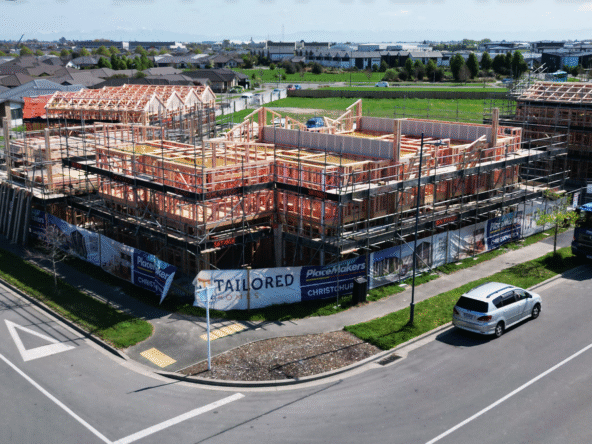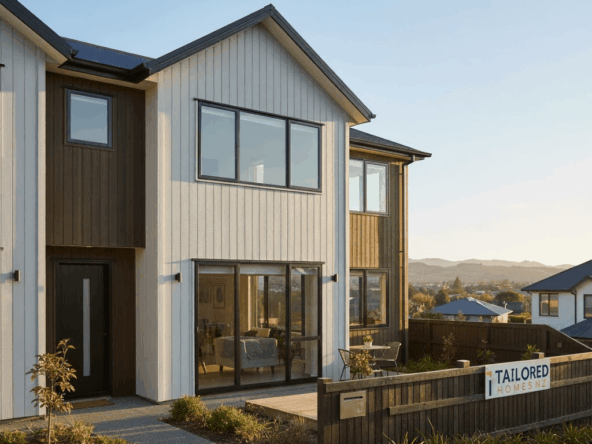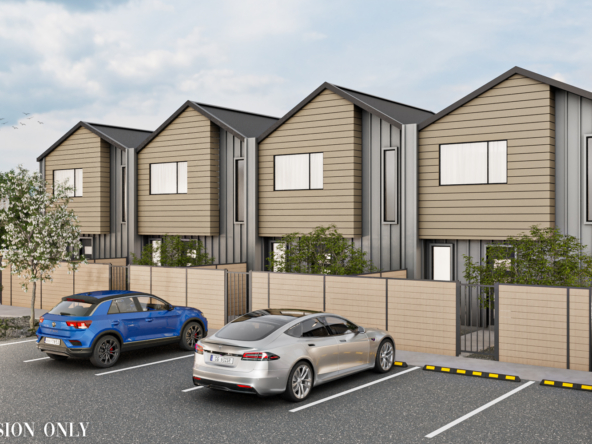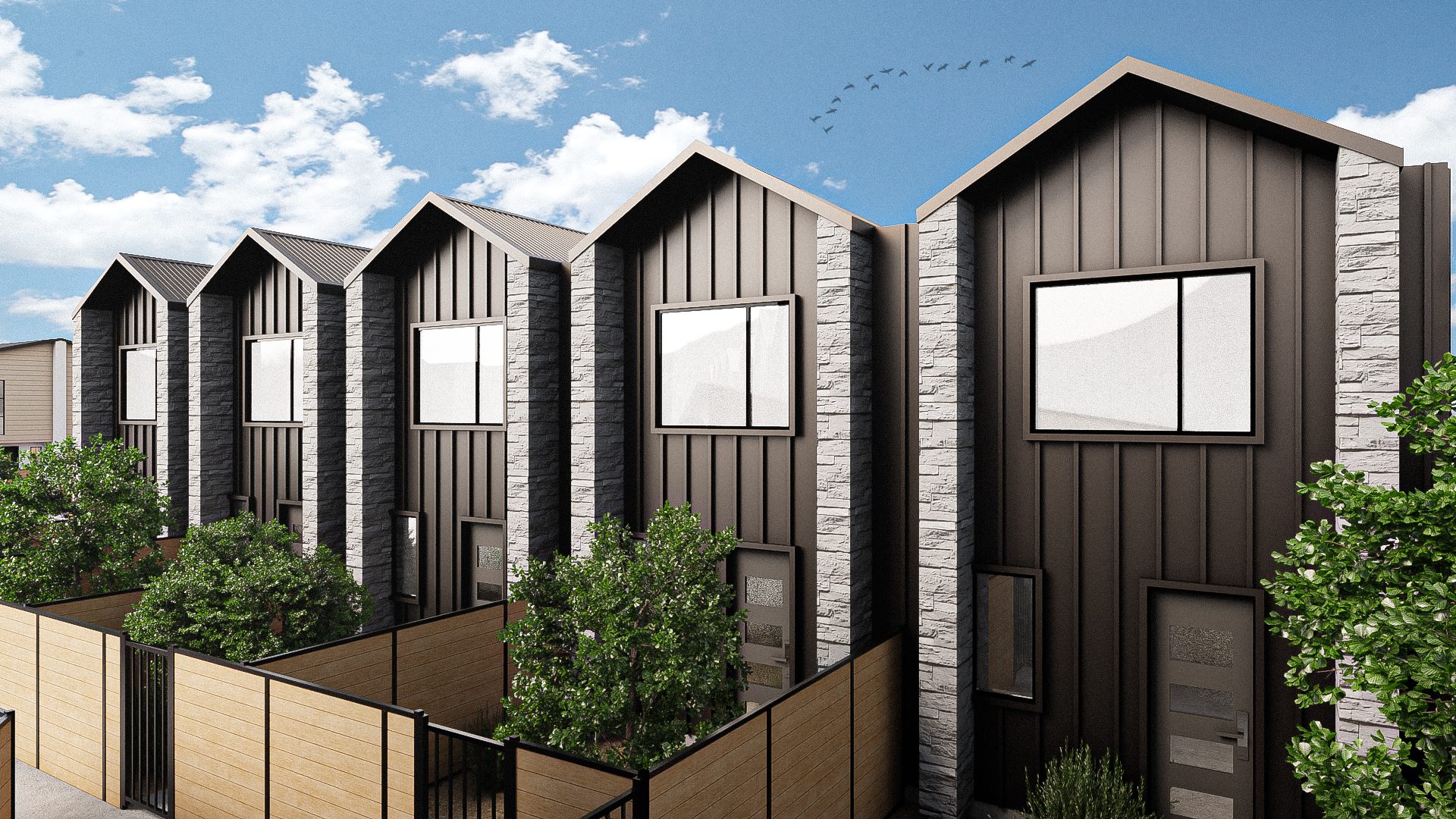
Quick answer: South Island townhouse development in 2026 is still led by Greater Christchurch. Canterbury has the largest multi-unit pipeline, Selwyn is the main family-home overflow corridor, Nelson and Tasman are producing smaller boutique releases, and Otago sits at the premium-lifestyle end. That is also what we see in our own stock: active freehold townhouses in Wigram from $617,000 and active Prebbleton homes from $849,000 (both as of 2026), with Tailored Homes having delivered 100+ homes across Canterbury since 2010.
For buyers and investors tracking the South Island townhouse development pipeline, the key is to separate volume markets from watchlist markets.
At a glance:
- Christchurch: the volume market, with the deepest buyer pool and the clearest fit for first-home and investor townhouse stock.
- Selwyn: The comparison market for buyers who can stretch into more land within commuting distance.
- Nelson/Tasman: a smaller boutique market with tighter release schedules and a stronger lifestyle influence.
- Otago/Queenstown Lakes: the premium lifestyle end of the pipeline, with more design-led stock and higher pricing.
If you want to compare formats before drilling into suburbs, start with our townhouse buyer hub.
The South Island townhouse landscape in 2026 – main hubs
In 2026, the South Island townhouse landscape is defined by Canterbury scale, Nelson/Tasman selectivity, and Otago lifestyle pricing.
Source: MBIE’s National Construction Pipeline Report 2025 forecasts 5,950 dwellings for Canterbury in 2026, including 2,640 multi-unit dwellings, versus 1,630 dwellings for Otago, including 710 multi-unit dwellings. Source: MBIE’s Building and Construction Sector Trends report shows multi-units rose from 12% to 44% of Canterbury dwelling consents between 2013 and 2023, and from 18% to 58% in Otago over the same period. The Reserve Bank of New Zealand held the Official Cash Rate at 2.25% on 8 April 2026, which has helped borrowing conversations feel more stable than they did during the peak-rate period.
- Christchurch: deepest buyer pool, strongest scale, and the clearest fit for first-home and investor townhouse stock.
- Selwyn: the main overflow corridor for households who want newer stock and more land within commuting distance.
- Nelson/Tasman: a smaller boutique market with stronger lifestyle influence and tighter release schedules.
- Otago/Queenstown Lakes: higher pricing, more design-led stock, and demand shaped heavily by lifestyle and premium buyers.
Christchurch – the dominant market (Wigram, Halswell, Riccarton)
Christchurch is the dominant South Island townhouse market because it combines price depth, rental demand, and a mature new-build delivery environment.
REINZ recorded a Christchurch City median price record of $735,000 in February 2026, while Canterbury’s House Price Index hit a record in February and then sat just 0.03% below peak in March. Canterbury also posted its highest sales counts since 2021 in both February and March 2026. On the supply side, MBIE says Canterbury consented 6,544 dwellings in 2024 and expects 5,950 in 2026, with multi-units still accounting for a large share of the pipeline. MBIE’s Q4 2025 monitoring also showed a median residential consent processing time of 13 working days in Christchurch City, which matters when developers are sequencing townhouse releases.
Wigram
Wigram is the clearest live example of townhouse-led demand in Christchurch’s southwest corridor.
Our own Four Seasons Estate at 41 Deal Street, Wigram is a 36-home freehold townhouse release with 1 to 3-bedroom layouts, floor areas from 73.9m2 to 117.7m2, and pricing from $617,000 (as of 2026). Completion is scheduled for Q4 2026. Our April 2026 investment material also puts new-build Wigram townhouse yields at about 4.8% to 5.4% on $659,000 to $725,000 purchase prices, with rental appraisals of up to $710 a week for 3-bedroom homes and up to $600 a week for 2-bedroom homes; those are current appraisals, not guaranteed returns. Buyers who want a live release can review our current Wigram townhouse options.
Halswell
Halswell matters because it captures the same southwest demand pool, but usually from family buyers cross-shopping townhouses against larger standalone homes.
We have built across Halswell for years, including family-oriented homes such as 33 Cork Street in Quaifes Park with a 180sqm floor plan on a 463sqm section and our 210sqm Ferbane Way showcase home. That is why Halswell often works less as a pure townhouse suburb and more as the upgrade benchmark: buyers who like Wigram’s convenience but need more bedrooms, garaging, or private outdoor space usually expand the search into Halswell and the wider southwest corridor.
Riccarton
Riccarton remains one of Christchurch’s most durable townhouse locations because proximity does a lot of the heavy lifting.
Compared with outer suburbs, Riccarton appeals to buyers who value access to the central city, university precincts, hospital employment, retail, and bus routes over section size. In pipeline terms, it is usually a tighter, more land-constrained market than Wigram, which is why well-located townhouse stock there often competes on convenience first and outdoor space second.
Selwyn District – Lincoln, Rolleston, Prebbleton growth corridor
Selwyn is Christchurch’s most important comparison corridor for buyers who want new stock, more land, and modern community infrastructure.
For townhouse buyers, Selwyn matters even when the product is not strictly townhouse-heavy. It is where many households decide whether to buy compact, lower-maintenance stock closer to the city or stretch their budget for a bigger freehold home. MBIE’s Q4 2025 consent monitoring showed a median residential processing time of 8 working days in Selwyn, and our own Canterbury footprint already spans Lincoln, Rolleston, and Prebbleton.
Prebbleton
Prebbleton is the clearest live Selwyn comparator in our current public stock.
We currently have two active Prebbleton developments – Hamptons Grove on Hamptons Road and Trices Road off Birchs Road – with 3 and 4-bedroom freehold homes from $849,000 (as of 2026). These are not townhouses, and that distinction is important. They sit in the decision zone, comparing a townhouse entry point to a family-home upgrade. A 5% deposit on a $650,000 home is $32,500, while a 20% deposit on an $849,000 home is $169,800. That simple maths explains why townhouse demand stays strong even when buyers prefer more land in principle.
Lincoln and Rolleston
Lincoln and Rolleston complete the Selwyn growth corridor by extending the same trade-off: more space, newer streetscapes, and longer-term community growth, usually at the cost of a longer commute and a higher total ticket than an entry-level townhouse.
We have delivered homes across both markets, but our current publicly listed Selwyn stock is centred in Prebbleton. For buyers, that means Lincoln and Rolleston are still critical comparables, while Prebbleton is the clearest live reference point in our own pipeline.
Tasman / Nelson – emerging boutique developments
Nelson and Tasman are emerging boutique townhouse markets rather than large-volume development corridors.
REINZ’s March 2026 report showed Nelson’s median price up 9.2% year on year to $710,000, and Nelson also posted its highest March sales count since 2021 while median days to sell fell to their lowest March level since 2021. MBIE’s consent monitoring adds a useful delivery signal: median residential processing times were 9 working days in Nelson City and 5 in Tasman in Q4 2025. In practical terms, this points to a region where demand is improving, releases are smaller, and townhouse supply is more likely to arrive as boutique infill or downsizer-focused product than as large multi-stage estates.
We do not currently publish active Nelson or Tasman projects, so we treat this market as a watchlist area rather than a live Tailored Homes sales corridor. For buyers and investors, the appeal is usually low-maintenance living in lifestyle locations, not sheer development volume.
Otago / Queenstown Lakes – high-end and lifestyle pipeline
Otago and Queenstown Lakes sit at the premium end of the South Island townhouse pipeline, where lifestyle positioning pushes pricing higher, and stock is typically more selective.
REINZ reported Otago’s median price at $755,000 in February 2026, up 13.2% year on year, and its March 2026 House Price Index hit a new record high of 4,318, up 3.6% over the year. Central Otago District also set a new territorial authority median price record at $885,000 in March 2026. MBIE forecasts 1,630 Otago dwellings in 2026, including 710 multi-units, so the pipeline is real – just much smaller than Canterbury’s and generally less entry-level in feel. MBIE’s Q4 2025 monitoring showed a 9-working-day median residential consent time in Queenstown Lakes, which supports delivery, but it does not change the core buyer profile: more downsizers, lifestyle relocators, and premium investors, fewer pure entry-level purchasers.
We do not currently publish active Otago projects, so this is another market-watch section rather than a live Tailored Homes stock list. The key takeaway is simple: Christchurch is usually the value-and-volume townhouse market; Otago is usually the premium-and-lifestyle market.
Tailored Homes’ active SI projects – table of subdivision/lot/price/timeline
As of 2026, our publicly listed South Island pipeline is concentrated in Canterbury, with one active townhouse release in Wigram and active family-home stock in Prebbleton.
| Area | Project | Product | Subdivision / lots | Price (as of 2026) | Timeline / status |
|---|---|---|---|---|---|
| Wigram, Christchurch | Four Seasons Estate, 41 Deal Street | Freehold townhouses | 36 homes; 1-3 bedrooms; 73.9m2-117.7m2 | From $617,000 | Q4 2026 completion |
| Prebbleton, Selwyn | Hamptons Grove, 250 Hamptons Road | Standalone freehold homes | Active lots 49, 85, 87, 106, 107, 126 | $899,000 to $1,039,900 | Active listed stock in 2026 |
| Prebbleton, Selwyn | Trices Road, off Birchs Road | Standalone freehold homes | Active lots 2, 3, 18, 39 | $849,000 to $1,109,000 | Active listed stock in 2026 |
In other words, Wigram is our current pure townhouse release; Prebbleton is the live family-home alternative for the same buyer catchment. That split is useful for real-world decision-making because many buyers are not choosing between one townhouse and another – they are choosing between a lower-entry townhouse and a higher-budget standalone home in the wider southwest and Selwyn corridor.
FAQ
The most common buyer questions in 2026 are about why townhouses keep growing, how titles work, what compliance means for landlords, and whether South Island pricing still gives a real advantage.
Why are townhouses growing in New Zealand?
Townhouses are growing because the market is adjusting to rising land and infrastructure costs and buyer budget pressures. MBIE shows that multi-units accounted for 58% of new dwelling consents nationally in 2023, up from 19% in 2013. Canterbury moved from 12% to 44% over the same period. Townhouses let developers add new stock closer to jobs and amenities without the land take of detached housing.
What is the difference between freehold and unit title?
A freehold townhouse usually gives you an individual fee simple title to the land and building. A unit title gives you ownership of the unit plus an interest in common property under the Unit Titles Act 2010, usually with a body corporate. Freehold is often simpler for buyers who want fewer shared obligations; unit title can be sensible when shared accessways, services, or common facilities need formal management.
Are new townhouses automatically Healthy Homes compliant?
Not automatically forever, but new builds are usually the easiest stock to keep compliant because the current design and specification already address heating, insulation, ventilation, and moisture control. Since 1 July 2025, all private rentals must meet the Healthy Homes standards, and landlords still need records and a compliance statement in tenancy paperwork.
Do investors pay stamp duty on South Island townhouses?
No general residential stamp duty applies in New Zealand. The more relevant costs are legal fees, finance, insurance, council rates, and any Inland Revenue tax consequences around rental income, GST in some development situations, or future sale treatment. Buyers should get transaction-specific tax advice rather than rely on generic rules.
Are South Island townhouses cheaper than North Island townhouses?
Often yes in Christchurch and parts of Selwyn, but not always across the whole island. Christchurch’s current Wigram stock from $617,000 sits well below many Auckland and Wellington new-build price points, while Queenstown Lakes and premium Otago product can close that gap quickly. South Island value is strongest where supply is deeper and land is less constrained.
Explore Tailored Homes’ South Island townhouse projects. Start with the live Wigram release, compare it against Selwyn family-home alternatives, and review our completed townhouse showcase before you shortlist your next move.
Sources used in this update: REINZ March 2026 Property Report, REINZ February 2026 Property Report, MBIE National Construction Pipeline Report 2025, MBIE Building and Construction Sector Trends Annual Report 2023, MBIE Building Consent System Performance Monitoring, Reserve Bank of New Zealand Official Cash Rate, Tenancy Services Healthy Homes compliance, New Zealand Building Code overview, Inland Revenue property interest rules, and Toitu Te Whenua LINZ unit title guidance.